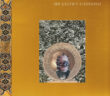





Richard Francis - Together Alone, Together Apart (CMR)

As so much communication exhausts itself in the practical function of contact to the detriment of any sort of content, the conversation sound artist Richard Francis holds with field recordings of indoor and outdoor spaces exists in a markedly different vein. It doesn’t see the latter partake in a game of manipulation - endeavoring to make the objects - various woods, plastics, fabrics, etc - speak or confess, to transform them into repositories of memory, nor does he invest them as a fetish and employ them in an attempt at identifying himself.

No deciphering of these three works is to be had in the least, not on a scale of meaning at any rate. Progress is made only in terms of their sensory effect: an undivided attention to tactility, pitch, loudness, and timbre rewards and then some. If any history is touched upon, it’s constructed in the way in which these fleeting sonic impressions draw one so deeply into their hazy, sometimes harsh surfaces, out of one’s own narrative, out of one’s own sense of time and place, and into another’s in a manner that prefigures one’s own mortality. An emotional charge is in this sense felt and, in fact, a mutual abreaction often seems to be taking place. Hence a common thread and inextricable tie is established between oneself and the work, a certain null equivalent; and hence perhaps the reason for the albums title.

With an inimitable deadpan delivery, the settings are rendered spare to an extreme - indeed, rather than reconciling, most aspects are pushed to the outer limits - often entirely concentrating on tiny, splintery tones and odd, glaucous washes of sound color.

The second track stands out as the most thespian, abounding in a sort of swollen minimalism, a clinical mosaic of fluctuating electricity and granular murk. This album attains to a sense of uniqueness and duration over the course of its some thirty minutes. Pieces are entrenched in a liminal time, a spasm in which what has been and what will be steals away.

Max Schaefer

Related posts:

Koshowko - Anarchy Monarchy (Las Machinas)

Koshowko tread the nether-world of the spaces somewhere between the dancefloor and the live stage, without ever really fitting in to either scene. In Australia, this can cause considerable frustration with limited opportunities to present the music to an audience. This is a shame as much interesting pop music gets made in these spaces by artists keen to explore forward thinking production without rejecting traditional melodic forms. Koshowko continues to fit this mould.

Anarchy Monarchy
is the first longer form release from the collective which revolves around Polish born, Melbourne based Martin K. Following numerous compilation and remix appearances and strong connections to the Clan Analogue stable, a debut single was issued in 2007. This EP stretches out a little further over 22 minutes, traversing electro-funk, dub influenced smoothness and more straight-up dance beats. ‘(Hu)mannequin’ is probably the least effective track, coming off rather euro-goth-disco. Much stronger is opener ‘It’s Time Now’ with a driving 110bpm pulse under pure pop. ‘Whispers’ bounces along with gentle electro-dub and some muted, melancholy sax. Nicole Skeltys, of B(if)tek and Artificial fame, rounds out proceedings with a darkened version of ‘The Story’ which also appears earlier on the disc in its original form. The remix is a bouncing 808/303 workout with some deep atmospheres underpinning the vocal snatches.

Anarchy Monarchy is a solid release that just might fall between the cracks of a homogenised market. But Martin K. and his troupe of collaborators have created something worthy of investigation which is ultimately very satisfying.

Adrian Elmer

Related posts:

Mike Patton - A Perfect Plan (Ipecac/Shock)

a perfect plan

Sure he’s hinted at it with Fantomas’ Directors Suite, yet nothing can prepare you for the bombast that greets the main title theme to the Mike Patton score for A Perfect Place. It’s a blast of brass from which your stereo may never recover. Welcome to Mancini, Barry, Morricone heaven. The reverence with which he holds these masters is something to behold. These names littered the Directors Cut, and though he then forcibly mangled them with a certain malicious glee, here he’s gone straight for a classy classical score. A sort of homage if you will to the masters. The languid strumming on the second theme, A Perfect Place, is very reminiscent of Mancini’s opening scene in Experiment In Terror, in fact there are Mancini moments spread throughout the 15 cues featured here, cheekily tipping his hat to the Pink Panther theme in the Main Title Reprise. Though cues may be too harsh a term, as many are fully formed musical pieces, songs even. And despite the obvious debt to the masters, Patton’s work here is revelatory. He’s been credited as a composer since the Bungle days, yet the music written performed, produced and mixed by himself here is mind boggling - particularly if you’re a film lover. Unfortunately the film, a 25 minute black and white Jim Jarmuschesque attempt at indie cool fails to offer much we haven’t seen before, and can’t live up to the inventiveness of Patton’s score. At times the music elevates the onscreen banality into the moody slacker noir farce it sets out to be, and the filmmakers do use Patton’s score wisely, not afraid to pump it up in the mix and let it work its magic. In particular the old time swing transistor music in the elderly neighbours apartment is great, as is the distorted vocals and searing electrics of the disturbing stomp of A Little Poker Tomorrow Night? Despite the limitations of the film you can see why Patton jumped at the chance to score it. It’s not too often you get the chance to dip into the urban noir, into bombastic brass, smooth jazzy bass, and create a suite of music that can sit alongside the old masters. This is a two disc set, one the score, the other a DVD of the film, and it’s fascinating to see how the filmmakers chose to use the music. Lets hope this is just the first of many film compositions that the ever eclectic and hyper energetic Patton.

Bob Baker Fish

Related posts:

Red Vs Blue - Season One (Siren)

red vs blue

The problem with most video games is that they’re boring, that they’re trying so hard to copy movies that they forget that they’re ridiculous and ludicrous. Red Vs Blue doesn’t, however as it’s not a video game it doesn’t do anything to assist with the problem. It is stolen from video games however, and re voiced by dumb slacker Americans so there is a link in there somewhere. The footage comes from those Halo games, and the voices are no doubt what the the characters in any video game would be saying if it had to endure you attempting just one more time to get past the stage. It’s Red Vs Blue, each attempting to wrench a Box Canyon in the middle of nowhere from the other colour. But rather than a crack commando force we’re stuck with regular Joe’s who bored out their brains, just try to get by. It actually comes off as a slacker indictment on war in general, in the unrepentant violence of video games, and gets pretty damn stupid -and at 5 mins or so per episode it doesn’t wear out its welcome. We’ve got sadistic ex girlfriend killing machines, a soldier who suddenly inexplicably starts speaking in Spanish and can’t stop, ghosts and an out of control tank. It’s clunky stupid, and at times pretty damn funny. Beginning life on the net It’s apparently up to its fifth season in the US.

Extra Features:
There’s a directors commentary, and it’s fascinating to hear how the cameraman was actually a character in the game on Xbox, getting crane shots from standing the cameraman on the tank and slowly raising it. There’s also some outtakes and some public service announcements about the dangers of weapons of mass destruction and tattoos.

Bob Baker Fish

Related posts:

Black Sister’s Revenge (DV1)

black sistas revenge

Far from a looker, Emma May, the hick cousin from rural Mississippi comes to visit 1976 Compton. Her two much prettier cousins are loath to take her out on the town, yet after pressuring from mom, they relent. After all her mother has recently died so she deserves to have some fun. So she doesn’t cramp their action however they implore their dates to find a mate for this buck toothed, hokey, this seemingly dim witted horror head. Running out of options they inadvertently hook her up with a hopped up sleaze-bag loser named Jesse who’ll make a play for anything in a skirt. Before anything can happen a fight breaks out. In goes Emma fists flailing, swearing like a trooper and kicks some male butt. This chick can fight. The key to Jamaa Fanaka’s (Penitentiary) very average Black Sisters Revenge is that it feels like a documentary. The dialogue seems improvised when it is intelligible, steeped in slang or often poorly recorded, and the camera movements don’t call attention to themselves. Also the plot developments are so poorly telegraphed that it doesn’t seem like someone bothered to sit down and write a script. Well Jesse does something stupid, gets picked up by the police and the besotted Emma May supports him financially whilst inside, but of course Jesse aint that bright, and if we’ve learnt one thing by watching this film it’s don’t cross a country chick- they’ve got all kinds of animal in them. Low budget, poorly made, it’s enough to give blacksploitation a bad name - only redeemed by the batch of whip-ass our Emma May brews up occasionally.

Extra Features:
Nothing

-Bob Baker Fish

Related posts:

Monos - Promotion (Twenty Hertz)

Promotion, originally released in 2000, cradles within it a nest of germinal ideas - an array of points of departure and areas of potential experimentation that Darren Tate, with the aid of Colin Potter and Daisuke Suzuki, would later pursue and, to some extent, see through to fruition through efforts on labels such as Die Stadt and Anomalous Records.

The gestural fullness, tonal flirtation and ambiguity that would later come to play a prominent part in Tate’s recordings, is here all but eclipsed by an approach that is content to stir and stroke the music’s surface, rippling its sheets of metallic sound with dots of micro-details (clicks, scrapes, squeaks) and looped phrases, which allow some simple patterns to establish themselves from the otherwise relentless mode of self-destructing noise.

It’s all very tight and concentrated; the piece standing out as a workout that grates restlessly at the listeners nerve endings. A blurring or fusion of most any sort is largely avoided. Indeed, were it not for the noise drone undertow the work would be less linear, more episodic. While always leaning toward the latter, the piece does to a certain extent maintain a sort of tense middle-ground between the two, full of curls, points and slashes, calligraphic gestures and assorted debris, which make for intriguing singular events, while at the same time being led into oblique modes of continuity by a low thrumming drone, whose pitch sounds almost expressive against such rough tonalities. The albums lure rests in this reversibility - in the intricate, nearly organic manner of its unfolding industrial environment, and the cold, brutal qualities of the natural elements housed within it.

Max Schaefer

Related posts:

Various Artists – Ventilate: Illawarra Electronic Sounds (Order Of Nature)

As its title suggests, this 14 track unmixed compilation Ventilate: Illawarra Electronic Sounds, released by Wollongong-based independent label Order Of Nature via grant funding from Wollongong City Council cultural services aims to provide an exposure point for the work of a wide range of unsigned artists currently operating amongst that city. In the sleevenotes that accompany this release, Force Of Nature certainly don’t indicate any interest or concern for the narrowness of genres, describing themselves as ‘specialising in experimental beats, hiphop, electro, industrial, punk and field recordings.’ It’s definitely a diverse aesthetic that manifests itself in the tracklisting here, which swings from leftfield ambience to dance-friendly beats, with a noticeable emphasis towards hiphop-centred sounds present.

Nameless Numberhead’s ‘Half The Beast’ opens proceedings on a more leftfield downbeat trajectory, with eerie ringing harmonics gliding through a slow backing of hissing beatboxing textures and plangent-sounding analogue synth tones in what’s easily one of this compilation’s most mesmerising near-ambient offerings, before Russell Law nicely picks up the baton with the delicate ‘Kite Pt. 1’, which places gentle guitar and vocal tones over a smooth backing of headnod hip-hop grooves, the delicate guitars trailing off at points in a manner that recalls Decoder Ring. By complete contrast, Sonny Syah and DJ Force drop a more than solid slice of Aussie hiphop in the form of ‘Ice 2 Eskimos’, which occupies the sort of territory marked out by Hilltop Hoods, just before CORE’s ‘Succumb’ changes the pace completely by taking things out into streamlined dancefloor-friendly electro-house.

Sean Sheap’s ‘Simply An Addict’ manages to provoke a grin with its tongue-in-cheek blend of tobacco-centric samples and funky instrumental hiphop grooves calling to mind Briztronix or DJ Regal, while experimental sound artist and instrument builder Warren Burt’s ‘Etude 4-3 From Proliferating Infinities’ builds itself from the digitally treated sounds of plucked harp strings, the elements constantly rearranging themselves subtly according to a strict mathematical sequence. Percussion Junction (the only act I’d previously heard of here) meanwhile provide the one live track here with four minutes of junglist action taken from Sydney’s Manning Bar last year, the fluid collision of skanking horns, tribal rhythms and breakbeats easily giving the likes of The Bird a hefty run for their money. While Ventilate certainly jumps drastically between styles and genres, resulting in something of a headscrambling listen at times, its real priority is to act as a showcase for the work of these predominantly lesser-known artists, and in that respect it succeeds admirably.

Related posts:

bvdub - Monuments to Oblivion (Southern Outpost)

Ex-Sydney label Southern Outpost relocated to San Francisco just over a year ago but everyone knows their spiritual home has always been Detroit. bvdub’s first release for the label arrived on audio cassette containing four tracks, two of which also have release on 12″.

First it was a challenge to find a tape deck to play this back on. I had to pull several boxes out of deep storage to find my old 3 head Sony deck. And to my surprise, cassettes sound frightfully good for what they are - I think most of us have forgotten that if they were made properly and played on a decent rig then they could be quite good, especially compared to the flatness of mid-quality MP3.

I’m sure that’s part of the story behind this release because as the tape spooled over the dusty heads, bvdub’s 4 ten-minute plus epics of warm, gaseous dubbed out Detroit techno were filled with even more hiss, static, and flutter as a result of the cassette medium. Much like a faded photo the effect of the cassette medium on the muted kicks and plangent synths adds a degree of melancholy and age to the listening experience. The Side A tracks meander on jerky rhythms and clouds of synth delay. Side B’s ‘Tears for a Fallen Empire’ and ‘Gone are the Days’ bubble along on rubbery analogue bass and straight techno kicks, and are the pick of the four.

There’s little new here - but that’s exactly the point - just top quality Detroit influenced dub techno in the vein of contemporaries Deepchord and Echospace. It is even worth digging out your cassette deck to listen.

Sebastian Chan

Related posts:

Various Artists - Wayfaring Stranger: Guitar Soli (Numero/ Creative Vibes)

wayfaring stranger

You can’t fight the folk. These days it’s everywhere with revivals, the new freak folk, folktronica and all kind of bizarre hybrids. But the numero label isn’t about that, they’re stuck in the past, back when folk was just plain folk. This is the second in their Wayfaring Strangers series, the first was almost intolerable, obscure Joni Mitchell styled coffee house singers, destined for, well obscurity. Guitar Soli however is much easier to deal with, to begin with it’s instrumental, just solo acoustic guitar. We’re talking fourteen tracks of rootsy, deltaesque John Fahey style plucking, None of the artists are known outside a small circle and most released small self released pressings of their material. But that’s Numero’s speciality, uncovering artists who weren’t appreciated during their day, and giving them a second chance forty odd years later. It’s six string heaven, recorded between 1966 and 1981, with artists who worshiped at the temple of Fahey, Takoma and Leo Kottke. It’s filled with impassioned picking, gentle strums and plenty of reverberant space, demonstrating the diversity of styles and approaches that the acoustic guitar can achieve when in the right hands.

Bob Baker Fish.

Related posts:

Snoleoparden - Snoleoparden (Rump/Creative Vibes)

Snoleoparden is Danish multi-instrumentalist wunderkind Jonas Stampe, who has a fascination for ethnic music and ethnological forgeries (to borrow Can’s term). He’s travelled a lot, including trips to Pakistan and Morocco. He’s even spent a year in India as a student of Ravi Shankar (although sitar is about the one instrument he doesn’t play on this album, oddly enough). His debut CD is a bizarre collection of psych folk, skewed instrumental soundscapes and outsider weirdness. It’s also the most fun album I’ve heard in a long time. ‘Hodja Fra Pjort’ sees Stampe on acoustic guitar leading a group of kindergarten children in a joyous, ramshackle singalong. The theme of childish ingenuousness permeates the disc. Stampe approaches music like a kid in a junk shop full of discarded instruments. ‘Dreng’ features an amazing field recording of a 6-year-old Pakistani busking boy singing. ‘Trance’ with it’s booming toms, percussion, flute and electronic duck quacks wouldn’t sound out of place on a Nurse With Wound record. ‘UFO’ features beautiful rippling electric guitar arpeggios overlaid with weird electronic boings. This record will not appeal to everyone, but those of you who appreciate unusual music, that’s off the beaten track, should make a beeline for this.

For MP3 previews check their MySpace.

Ewan Burke

Related posts:

Asher & Ubeboet - Cell Memory (Winds Measure Recordings)

The memories harbored herein play a sort of aural hide-and-seek. Austere sound textures and noise detritus are glimpsed through crevices that close like eyelids and occasionally open onto vast, largely motionless sonic shores.

Track titles such as “alter” (the other) and nullus (neither) stand as concrete reasons supporting the intuition that these works serve as meditations on the foreign and exceptional quality secreted by experience. A world that speaks in order to say nothing is indeed a mysterious phenomenon, and it seems precisely this sort of process that has ensnared the duo’s attention. They gather field recordings like pebbles on the beach and pour them out over these two lengthy works. The voices of everyday incidents and events thus play tirelessly, but retreat as they invite one closer, and guard their secret while bearing all.

“Alter” is a dense accumulation of static rather than a clean drone. Molecules of sound are investigated in their very fiber. A versatile touch and considerable endurance is demonstrated in the turning over and assessment of each sussurating speck. One’s grasp of the piece grows no firmer as this process advances, however. In fact, the contrary proves the case, as the piece becomes only more abstract, distant, and intangible. Before long, its shadow has usurped its frame, a chilly, uninviting mixture of suffocated electronic buzzes and sombre cavernous chimes.

“Nullus” sustains this mood and momentum while also occasionally testing the surface tension with a crunching metallic jaggedness. While its concerns are admittedly few, Cell memory thereby manages to guard its secret very well. Its perplexing though skilled arrangement is enticing for its challenging nature - an ideal rock on which to cut one’s teeth.

Max Schaefer

Related posts:

Gulls - FREEer (Sonic Lozenge)

A gentle drum loop stumbles along for a few seconds, then the bass drone kicks in and sets us up for the journey. Two minutes in and group leader Jesse Munro Johnson’s distant trumpets intone the Last Post’s cousin. From here, things get freeform with drums, percussion and bass joining the electronics and trumpets. A single live take spans the entire first side of the vinyl, building, as improvisation often does, in intensity as it progresses. There is a consistent aesthetic across the track’s quarter of an hour, though each musician moves through musical ideas so that things constantly shift and hold interest. It’s an interesting half-way point between abstract sound and musical deliberateness and, for the most part, the group pulls it off successfully. It’s not free in a jazz sense as such - the rhythm is far too solid and the playing far too tuneful - but there’s that element of play and a ‘throw out anything to see what sticks’ attitude on which the whole piece happily rests.

Side two is the entire piece reworked by Michael Bruce with drum machines and synths and the trumpet tracks through a guitar amp, all again recorded live in a single take. It’s a very interesting blend of remix and cover version and, while very obviously based on the same piece of music, sheds completely new light and is just as listenable in itself. Loping drum loops underpin the fuzzed up synth and trumpet drones, with a simple, almost dub, two note bass line adding weight.

Mention must also be made of the hand-printed artwork, always a major plus in my opinion. If it is psychedelic-tinged contemporary improv that suits you, then the music and packaging of this work will definitely not disappoint.

Adrian Elmer

Related posts:

An On Bast – Words Are Dead (Rednetic)

An On Bast - Words Are Dead

Polish downtempo electronic music producer An On Bast (real name Anna Suda) has previously released two albums of what she describes as ‘delicate synthetic music’, beginning with her self-released debut Welcome Scissors and followed by her follow-up Happy-Go-Lucky on Polish netlabel Etalabel, both of which emerged within a few months of one another during 2006 and were swiftly followed up by Suda’s participation at that year’s Red Bull Music Conference in Melbourne. Two years on, this seven track EP Words Are Dead represents Suda’s first release through the UK-based Rednetic label and certainly finds her delicate synthetic soundscapes in good company with that label’s overriding leanings towards atmospheric downbeat IDM. Opening track ‘Permissum Sulum’ beautifully sets the scene with its deep, dubbed-out bass pulses and droning harmonic tones providing a lush counterpoint for the whirl of hyper-detailed breakbeats and harsh electronic noise artefacts that pepper the higher end of the mix – the entire combination evoking an atmosphere that’s similar to the on-board systems of a satellite periodically making adjustments as it floats through space.

‘Foible’ meanwhile opens with subtle piano tones ringing out over a blissfully optimistic wash of sweeping harmonics, but before long, clicking electronic rhythms begin to writhe insistently out of the cracks, gradually shifting the entire track up in tempo until it reaches a dubbed-out minimal trajectory that hints at Vadislav Delay’s more introspective moments. While there’s certainly plenty of ‘delicate synthetic music’ on offer amongst Words Are Dead’s seven tracks, the flexing, dancefloor-inspired rhythms are never really too far from the surface, and certainly emerge explicitly on strong moments such as ‘Sth Important’s juddering fusion of headstrong, hiphop-informed beat programming, eerie cut-up vocal samples and contemplative analogue synth tones. Well worth investigating.

Chris Downton

Related posts:

Raoul Sinier – Huge Samurai Radish (Ad Noiseam)

Raoul Sinier - Huge Samurai Radish
Parisian digital artist and producer Raoul Sinier has previously released two albums and a smattering of EPs as Ra through an impressive selection of labels including Coredump, Planet Mu and Sublight, but this latest EP on the Berlin-based Ad Noiseam label Huge Samurai Radish sees him abandoning the retracted alias in favour of his full given name. Intended to act as an appetiser for Sinier’s upcoming third album Brain Kitchen, Huge Samurai Radish in many senses comes across more like a full album, running in at 12 tracks in total; with seven new tracks featured alongside five remixes of the title track. In its original ‘Video edit’ version, title track ‘Huge Samurai Radish’ certainly impresses with its intricate fusion of contorted IDM/glitch-hop rhythms and eerie atmospheric samples, its treatment of warped vintage vinyl samples almost calling to mind Amon Tobin’s latter-day tainted soundscapes.

Whereas Mr. Tobin frequently specialises in creeping unease however, there’s an underlying beatific ‘glue’ here that holds proceedings together even when they threaten to descend into complete hyper-edit chaos, in the shape of the delicate, optimistic-sounding synths and instrumental textures that form the melodic core of the track. It’s a factor that’s also immediately apparent amongst the flickering, stutter-edited rhythms of opening track ‘Bring It On’ – while the swirling organs and massed background B-boy chants suggest menace at first, they’re tempered by the addition of the sorts of soaring guitar licks that Def Jux might sample if they were a bit more ‘wide-eyed.’ The same is certainly also true for ‘Untitled6’, as sets the stage for a nightmarish descent amidst brooding orchestral chords and jack-hammer bursts of breakcore beat programming, but in this case, there’s considerably less light left for the listener at the end of this particular John Carpenter-esque tunnel.

The five reworkings of ‘Huge Samurai Radish’ collected here also provide consistently engaging and stylistically divergent re-takes on the original, and in truth represent some of the most impressive tracks here. Former Sublight labelmates Lynx & Ram certainly impress with their reinterpretation, which recasts things in a brooding, synth and guitar-dominated gothy-punk setting, as does Datach’I, who ventures out into nosebleed breakcore rhythms like some meeting point between Squarepusher and Shitmat. It’s Sinier himself though who perhaps manages to slightly outdo his collaborators with his re-take, which features guest vocals from ex-Cannibal Ox MC Vast Aire, and is easily worth the price entry here alone. Well worth checking; from the sounds of things on this appetiser EP, Sinier’s upcoming Brain Kitchen album should offer up more than a few delights.

Chris Downton

Related posts:

Orchestramaxfieldparish - The Silent Breath Of Emptiness (Faith Strange)

The Silent Breath of Emptiness is like encountering a static photograph that, upon closer inspection, reveals itself to be a timelapse film. The slow building, reflective guitar drones absorb as though a dark starry field. These pieces stand without any foreground or background. Rather, they exist as a network of needling threads, crosshatched and manipulated, sketching a welter of variations on a single theme.

Pieces are played with a gentle spirit and an attention to the occult and elemental. At first, the work is a treacle of strums, which unfurl and circle in the shifting light of successive sound washes. With the momentum being slow, an intense concentration on the interlocking lines is made possible, better still, it is encouraged or even requested, though always in a hushed manner. Indeed, the piece lays itself open while at the same time making its emotions felt subliminally, as though transmitting or sharing a secret, rather than making it known explicitly.

The remaining segments continue to coil into themselves with stronger and more malicious thrusts. “Part 3″ sinks into a morose, melodic continuum and almost epiphanic chimes, before oozing into a distantly undulating crescent of atmospheric noise. “Part 4″ continues to seep into dark, tunneling visions, using what sounds like several guitars to produce a dense, almost symphonic feedback drone. Even here, though, shards of light filter through the darkness, giving the piece a movement and vibrancy that is knotty and wholly inflaming.

Max Schaefer

Related posts:

Gabi Lunca - Sounds From a Bygone Age Vol.5 (Asphalt Tango/ Planet Company)

gabi lunca

Romanian singer Gabi Lunca was a legend behind the Iron Curtain, a true Diva. They called her “Tziganca de matasse,” the silken gypsy women, yet this wasn’t because of her voice, which was smoky and slightly husky, rather it was because she was so debonair, always presenting herself in such finery. The liner notes to Vol.5 of German label Asphalt Tango’s incredible reissue of gems from the archives of the former state radio in Bucharest, speaks of a rivalry with the hard drinking wild living Romica Puceanu (Vol.2). However with four kids to her accordionist husband it’s a wonder Lunca had time to perform at all. This collection is from her golden years, from 1956 - 78 and features her slightly strained smoky voice over relatively gentle paced music, where she is simultaneously a consummate professional, her voice effortlessly moving up and down in pitch in these elongated wails, yet she’s also seemingly overcome by the passion of her music as her voice slightly strains at poignant moments. It’s a delicate tightrope and Lunca manages with ease. She was apparently singing quiet melancholic tales of passion and yearning, and you can sense a certain sadness to her approach, yet the beauty of the music seems to offer some kind of hope. Come the 1990’s Lunca elected not to join the wedding circuit and all but opted out of music, singing only at the service of the Bucharest Pentecostal community. In the extensive liner notes, alongside some pictures from back in the day there’s also a picture of a 70 year old Lunca grinning from ear to ear. You will be too. This series can do no wrong.

Bob Baker Fish

Related posts:

DJ Dolores - 1 Real (Crammed/ Filter)

dj dolores

Brazilian DJ Dolores third album demonstrates the futility of a word like fusion, possibly even categorisation drawing upon elements of Brazilian music, electronic music, dub, jazz, funk, even rock with a few vocalists singing mostly in Portuguese, yet also strangely enough broken Japanese. On the cover he seems kind’ve intense and he has aligned himself with The Danger Global Warming Project, though his tunes also incorporate concepts of violence in Brazil, globalisation, fundamentalisim, yet also a soundtrack for X-Men in Brazil and the effect hot beach babes have on him. Right. Thematically he’s all over the place, though musically he’s very much about chilled funky beats, yet isn’t afraid to release stabbing horns or some scratchy violin occasionally. It’s the kind of music you’d love to find on the streets. In fact 1 Real is probably the price you’d pay for a cheap bootlegged cdr on the streets of Recife, Delores home town. He has composed for cinema and theatre, though 1 Real is very much about the groove and highlights include Wakaru which typifies his contradictory approach with Caboclinho folk flutes, violin, and trance basslines. It shouldn’t work yet comes across like an electronic Can, whilst other piece seem intimately linked to more traditional Brazilian with piano accordion and Brazilian vocals yet with a dub feel with electronic percussion. This is a man who can’t sit still.

Bob Baker Fish

Related posts:

Various Artists - The Roots of Chicha: Psychedelic Cumbias From Peru (Barbes/ The Planet Company)

The late sixties brought the country folk to the cities of Peru following the oil boom and a new genre was born, named after a corn drink popular with Andean folks who turned it into a soft drink or mild alcoholic beverage. It says a lot about the class of people who popularised this music, who in the main came from the poorer neighborhoods. It’s a sound that evolved from the cumbia though was profoundly influenced by English and American music, particularly surf guitar. We’re talking traditional Latin rhythm sections of congas bongoes and timbales with more rock elements like electric guitar bass, drums, Moog synths and Farfisa organs. You can hear the psychedelic pop elements in the raw riffing guitars in the vocal harmonies, though the fusion aspects make this music nothing short of amazing. Music’s ability to cross pollinate across cultures never ceases to amaze and you would be hard pressed to find such a short lived joyful though odd western influenced indigenous music. It’s all about wah pedals about cheesy synths, killer percussion, and there’s some great (Iron Butterflyesque) off kilter organ solos. The music is rickety but funky, feeling like it might fall apart or trip right out into the ether at a moments notice. You can’t go wrong here, but surely you already knew that, everything you need to know is in the title of this incredible release.

Bob Baker Fish

Related posts:

Platform - Distanced (Minimal Resource Manipulation)

There’s one aspect of electronic music production that has long annoyed me and that is the use of deliberately painful high pitched sounds for prolonged periods of time. Platform (Matthew Atkins) opens his album Distanced with 3 minutes of the most alienating high pitch sitting above the background texture. It’s unfortunate because every time I listen to the album it puts me in a negative frame, undermining much of the excellent sounds that follow. I normally end up fast forwarding through the section and then feel I’m not being fully immersed in the work.

What follows it is actually quite good. Simple textures and ambient sounds are processed without ending up sounding overly digitised. As the ear tunes in to the various timbres, very recognisable sounds emerge - a flittering typewriter, a modem connection, crinkling paper. A nice balance is developed between expansive backgrounds and intimate foregrounds. As the half hour of music across the disc evolves, a definite arc can be traced as proceedings become quieter and quieter and the listener is drawn in to a more active role. Sounds are stripped to bare particles, gently flowing across the stereo spectrum.

I’ve taken to listening to this disc without its first 3 minutes. While the overall scheme of the recording - a gradual shift from aggressive alienation to intimate caressing - makes sense of the initial piercing, it’s hard for all the warmth of the latter half of the disc to coax me out of the bad mood that one sound can put me in. Without it I can enjoy the entire journey much more effectively.

Adrian Elmer

Related posts:

Assemblage Point – Fire! (UM Records)

Sydney-based dub duo Assemblage Point had the rather unique pleasure of having their preceding Cent’nal Dub single win the ‘Best Experimental Song’ category in last year’s Global Marijuana Music Awards, and this follow-up 12” Fire! on their own UM Records label represents the first taste of their upcoming debut album, expected in June 2008. On the A-side of this 12”, ‘Fire!’ shows a considerable stylistic shift away from the spliffed-out echo-chamber drenched excursions of Assemblage Point’s previous releases, with Oz-hiphop vocals taking the forefront as moody horn samples blare in the background over a vast rolling bed of bhangra-meets-dancehall percussion, handclaps and whirring turntablist noise – the end result being not entirely dissimilar to the likes of It Crawled From The Sea-era Underlapper given considerably more of a Black Ark-ian twist. On the flip, ‘Broken Smile’ sees unhinged lunatic vocals drifting beneath a menacing backdrop of buzzing analogue synth bass, clattering hiphop breaks and looped samples of whistling, and while the occasional sense of overall directionlessness sets in at points, it’s more than made up for by the judicious deployment of sampled jazz-noir horns, which build into a ferocious wall of noise as the track nears its end. The Soundsbent remix of ‘Cent’nal Dub’ meanwhile certainly lives up to its title, pitching the original’s swaggering dub-reggae rhythms right down to a fugged-out crawl while sending the snares scattering through all manner of dub-delay FX. Assemblage Point certainly manage to hit more than a few interesting buttons with this latest 12”, but more attention to the final mix and mastering here would have yielded a stronger end result.

Chris Downton

Related posts:


Close
E-mail It