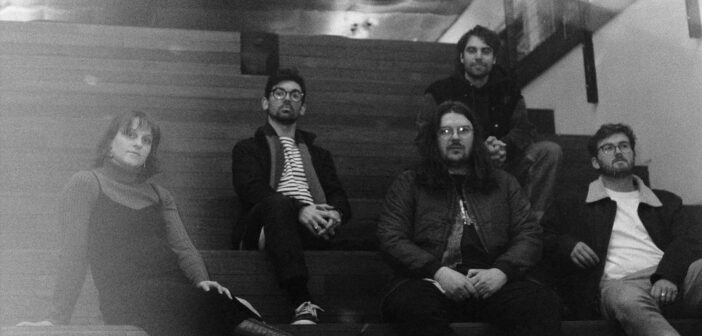
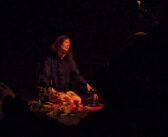
Austrian group Tupelov are made up of four members, have roots in the post-rock landscape more than likely ten years prior when it was all the rage but have since moved on to create here, on their most recent release, a series of avant sketches based around the softer areas of free jazz and classical musics.
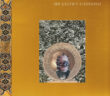
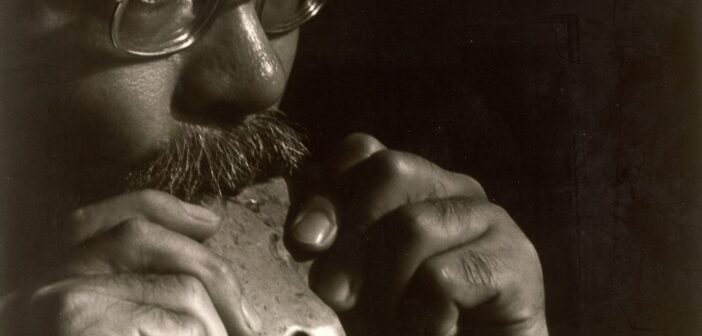
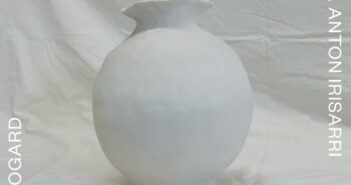
The first cut on Memories of Bjorn Bolssen is a quiet rather unforgiving stab at rendering piano shapes and chords amid thin taps of sticks and electrodes. It begins with a those same heavy shapes and ends sadly hanging on cymbal scrapes and slides. A lot of the album is centred on Peter Holy and his borrowed grand piano, with drums, bass and electronics all allowing space for it. There is musical sense of loss and remembrance, too, for this fictional Bolssen character (who provides ambience on the first track and a fake portrait of whom adorns the front cover, looking like some startled but quiet viola player from a 1930’s Swedish jazz orchestra) and the pieces move slowly, themselves filled with either regret or general uneasiness. Track 3, the terribly titled, “Garlic 07” is the standout. It slows everything down to bass and buzz, still inside a jazz framework and allows guests on clarinet and cello to appear and move through the mournful apparition.
The only thing that jars these sketches together, however, is this strange desire of Holy’s to slam down some awkward chord that instantly sabotages what feels like the intended direction of the pieces. As the rest of the band attempt to push the songs higher, Holy does too, with some gorgeous classical motifs, until he brings his hands down seemingly without forethought. The pieces overall have enough flow and movement to hold everything together though and the general ideas of slow-moving loss and regret hang heavy throughout.
Joel Hedrick
Related posts:

From an empty art museum in New Mexico, Seattle sound artist Steve Peters managed to extract fourteen frequencies between 70Hz and 3Hz in a single, hour-long recording. The hour was divided into over thirty segments and then recombined for this, one of the many sets of possible combinations that could have derived from the original four channel installation. No people were present for the recording. The only sounds are those that incidental to the building and have been processed and equalized to obtain the tones represented here on this limited run CD-R.
The idea that you could take one room’s resonance and relocate it to your own or anyone else’s is one that I’ve always loved and this could very well be the height of such a concept. Nothing but the room’s ambience, processed and re-programmed to highlight your own room’s surrounding sounds. Spooky resonance is interwoven with clear, wavering tones that feel strange but almost right when sat against each other. At times they sound anything but organic, as much as the label’s original idea for the project would have you believe. The overall feel of this recorded room is cold, white and empty with maybe a shadow of light-blue moonlight in the furthermost corner. Its gives the sense of making slightly disconcerted about being in your own space, as if the original building’s secret ghosts, its endless tales of long-disappeared builders, visitors and occupiers might have carried through onto disc. It is, of course, recommended for low playback so that any such spirits might not bet given a chance to haunt the corners of your own room. Just the space between your ears and the sound.
Joel Hedrick
Related posts:

Robert Curgenven is a Northern Territory sound artist who spends as much time recording and performing in and around Sydney and Berlin as in his beloved top end. These recordings have been collected over the last ten years in as many of the deserts, wetlands and rock formations around the most remote parts of Australia that you’d care to name. His ideas about “the dislocation of the remote” (in my case, moving the edge of the desert to a city terrace packed with filthy students) and the quietly layered manipulations of textures and sound pressure are all set out in Silent Landscapes, the first of many in a projected field recordings from Italian label, easily and fittingly titled, er, Recorded Fields.
“Silent Landscapes No. 1” takes its own quiet time to open: the sound of fire, which, without context, could be mistaken the usual electronic hiss until the tiny pops and cracks that could only be generated from an natural source appear and give way to soft, tinny tubular bubbles that stretch eventually to a searing point then dropping out to let cicadas whistle and cry. Each of the separate recordings is slowly tweaked and turned to let in the surrounding natural forces. “Silent Landscapes No. 2” describes an arc across the eastern, northern and central parts of Australia; the swishing of dry grass, the hum and whine of thousands of kilometers of power lines. All moving in one after the other to create the sound and tension of impending rain, which, when it does come, is brief but welcome, Curgenven making sure to keep all the insects and birds still layered through.
Other recordings/settings include the once-every-ten-year ritual “cleaning” of a German forest as well as the windy city seascape around the city of Sydney. Curgenven’s attention to the quietest of tiny natural sounds as well as the areas that are there to shape them surely marks him as one of Australia’s finest in the art of field recording/manipulation and this work, whilst describing wonderfully still and quiet landscapes, proves that it is anything but silent.
Joel Hedrick
Related posts:

Mmmm, warm drone. Warm warm floating drone. Spaceless, empty and all-encompassing through the ears to my open room. No, I’m not talking about your newly dusted off and tasty Fripp’n’Eno collab-o. This drone comes direct from the Asian land of extremes.
Japan’s Hakobune utilises apparently only an effected guitar and the occasional field recording to make the pieces that make up the majority of We Have Left The Window Open Sometimes. With a title like that you’d be forgiven for mistaking it for a Mum release and this music runs a similar line: that of open soundscapes, long sweet tones and that feeling of purest release. Swathes of this wonderful floating drone hover and hum behind sparkling notes like so many shifts of sinking light. What seems to be the beginnings of a phrase or melody shifts slowly, languorously taking its time in reaching for some distant unattainable chord before it starts to swim smoothly back into itself. Its music of pure elements; the meditative powers of pure air or pure water played out for aural inception.
Remixes of the disc’s first three tracks appear, too, to give the original pieces an even greater depth. They seem to add more to the disc’s already massive atmosphere. David Tagg’s remix of “The Way In”, for instance, adds a mid-range echo (sample of a Mongolian throat-singer? has to be . . .) that runs like a soft spine though the wavering higher registers and what is either the affected ring of the original guitar line or children laughing and singing to each other in slow motion.
It seems a shame that the apparent field recordings weren’t put to more noticeable use, but the deep, overflowing, ever-reaching atmosphere that holds these pieces together is enough to tone down any agro ‘roid freak on his explodo adventures through the real world. Put simply, this is pretty much bliss on a disc.
Joel Hedrick
Related posts:

In 1979 the then 13-year-old Frank Rothkamm snuck into a church whilst skiing his way down a Swiss mountainside. Inside he stumbled across an immense, old and out-of-tune organ upon which he attempted to play a fugue by Bach from memory. Once finished he slid back out to the snowfields and down to the valley below. He never played an organ again. But, in 2002 he spotted a Yamaha Electone organ, remembered that fateful fugue and soon began working on his own compositions.
For this mini-album (“33 minutes, 33 seconds of music, played with 3 times 2 hands and feet“) Rothkamm has devised a tuning system that sets each of his three organs at 33 cents apart from each other and runs through a series of series of slightly unhinged keyboard experiments.
The organs at times seem to be acting independently of each other, as though they are being improvised on from different recordings taking from different rooms. Bass chords swell and drift and are stabbed at by off-centre tones from the higher registered organs. Through “California Pink-A-Pades”, Riley-esque loops and equations are made to spin and be sucked out as though they were some bright-sparkling UFO signal. But the ideas are too unfocussed, the tuning too warped for anything other than just weird tones wobbling out of your speakers. Thankfully Rothkamm has spent most of his time fleshing out and recording his best ideas. “Sleepy Bullet” gives fleeting glimpses of skewed classical figures in kinda odd harpsichord fun-fair and also allows for the sounds of the foot-pedals and keys being depressed to occasionally appear and eventually become the final section of the track.
But generally the sounds of the organs are too tacky and out-dated and Rothkamm has a lot of trouble helping his instruments to carry any effectual tonal weight. This, despite that fact that almost every note in his freaky, freaky organ bag is used up and used up alright.
Joel Hedrick
Related posts:

Stafford, UK-based producer Andy Meecham is probably best known to wider audiences for his electro-funk/disco outings as part of Chicken Lips, and his more breaks-centric explorations as Sir Drew, but he’s simultaneously traversed a somewhat darker and more downbeat path as The Emperor Machine, emerging back in 2004 with the acclaimed debut album ‘Aimee Tallulah Is Hypnotised.’ Four years on, this second album ‘Vertical Tones & Horizontal Noise’ compiles together the six-part 12” series of the same name, originally released by DC Recordings during 2005-07. Meecham’s output as The Emperor Machine continues to be characterised by a distinctly band-oriented approach as compared to his other production persona, and in this case the emphasis falls firmly upon downbeat disco and punk-funk grooves, touched with a tangibly Italo-electro indebted edge. It’s also something of an analogue synth fetishist’s wet dream (as track titles like ‘Seka Wants Your VCS3’ indicate), with the vast sweeps, washes and squeals of what sounds like a veritable arsenal of Arps, Moogs and strange oscillators taking up the foreground on the majority of the 14 tracks here.
While live bass and snare-focused tracks such as opening track ‘Who You?’ and the Italo-arpeggiated ‘’Monkey Overbite’ manage to provide an enjoyable dose of nocturnal punk-funk groove that comes across in a similar vein to a slightly more downbeat version of Munk or Whomadewho, it’s the repeated use of the same basic instrumental elements on many of the tracks here that ultimately leads to the sense of repetition beginning to creep in. Thankfully, it’s the moments where Meecham decides to go further off-track that result in some of ‘Vertical Tones…’ more memorable offerings. ‘Lift Up Chong And See’ tosses in cut-up reversed female vocal samples to inspired effect as a battery of rattling conga rhythms and drum machines trace a path beneath streamlined electro pads and wasp-y bursts of analogue synth noise, while recent single ‘No Sale No I.D.’ also manages to provide plenty of highlights with its psych-tinged fusion of retro-lounge exotica, John Barry-esque theatrics and slinky garage funk. While at times ‘Vertical Noise…’ feels like little more than a compilation of 12”s than anything else (and it’s perhaps not to be blamed too much for that, because that’s what this second album basically is), longtime Emperor Machine fans shouldn’t be disappointed with what’s on offer here.
Related posts:

Fluttering textures swirl endlessly amidst a slew of ambient vocal samples on the opening track of Headphone Science’s Painted. Summarising much of the album as a whole, ‘5CM’ recalls the emptiness of expansive yet populated spaces with these very samples – train station announcements and airport final calls to name but a few. Sounds of engines roaring off into oblivion coat the atmosphere in a heavy yet warm vapour, encapsulating a sense of solitude provoked by themes of departure. All this comes within the limits of a glorious six minute journey but vanishes almost as soon as it appears with the trills on ‘Spirits at Night’.
Dustin Craig’s Headphone Science project is an intensely pretty experience. Though Pictures only consists of eight original tracks by Craig, followed by five remixes, there is such stylistic continuity that each composition merges seamlessly into one another. Glockenspiels and xylophones are scattered across the space of the Sokif remix of ‘Life Is a Dream’, as if it were their swan song. Elsewhere, synthetic elements take over more prominently from their organic counterparts particularly when an electronic piano and glimmering synth duel it out for attention on ‘Makoto and Mai’. Aquatic ambience haunts the feel of ‘Clouded in Treasures’, even though the beguiling melody betrays its true sentiment. Craig’s portion of the album concludes with ‘She Tried to Help Him’, a gentle, if slightly conservative end to a collection of aptly juxtaposed themes of whimsy and sorrow. With a delicacy that can only really be done justice when it envelops the listening space, Craig’s work truly benefits from the extravagance of his moniker – headphones.
Alexandra Savvides
Related posts:

‘When the going gets weird, the weird turn pro…’ - that saying might well apply to this bizarre collaboration between Andrew Liles and Daniel Menche. Anyone up for a dark ambient concept album about the life-cycle of flies? Don’t all rush at once…
Andrew Liles is an esoteric production maestro based in Brighton, who has worked with the likes of Nurse With Wound and Current 93, and Daniel Menche is an established noise musician from Portland, and this is their first collaboration. Separately, Liles and Menche have released - well, a lot of albums - I gave up counting them actually… But this is no mere soulless foray into the avant-garde. This is 100% genuine, straight-up, satisfaction-guaranteed-or-your-money-back weirdness, with a real artistry to it. The Progeny of Flies plays like the best soundtrack to the best film of the best Murakami novel that hasn’t yet been written.
You want sensurround drones? Tick. You want ghostly piano notes? Tick. You want the odd buzzing fly sound? Uh, tick. It’s all here - and then some. This is a great record, bursting with oneiric strangeness and somnambulistic intent. Deserves to sell more copies than Coldplay.
Ewan Burke
Related posts:

It’s been a long, strange trip for Mick Harris. Once upon a time he was the drummer with Napalm Death, (in)famous for compacting heavy metal into super-concentrated tracks of sometimes just a few seconds duration. But he’s gone to the other extreme with his dark ambient project Lull. Like a Slow River is his eight or ninth album under this name, and it’s a challenging listen. Five tracks are listed on this 60 minute outing, but it might as well be one long suite, as the pieces all sound more or less the same. This disc exists in a hinterland somewhere between music and noise - there’s no rhythm, harmony, or melody - and yet… If it’s noise, it’s not confrontational in the style of Whitehouse et al. It’s the aural equivalent of standing on a hill, listening to the sound of the wind, looking out across a bleak, barren landscape - and in fact one of the tracks is titled ‘Treeless Grounds’. The overall sound is reminiscent of Thomas Koner (and indeed Lull & Koner shared space on Virgin’s groundbreaking Ambient 4: Isolationism CD back in 1994), but not as austere. Lull is unlikely to ever find himself on the cover of glossy magazines, but the few people who do buy this release will savour it, the way you would an expensive bottle of wine.
Ewan Burke
Related posts:

Dan Friel toes the line of studied degradation on Ghost Towns. As though a sort of aural equivalent of the Dadaist’s ‘word salad’, his first full-length contains obscenities and extravagances of most every imaginable waste product of sound in its relentless destruction and reconstruction of its aura.
For better or worse, these noisette miniatures don’t hinge upon a principle of evil. In fact, all things being equal, they are quite amiable, even if they betray a penchant for audacious reworkings. The tracks are designed with a certain precision. The pieces never feel unfinished, and they normally flow into one another making the disc unlined by gaps, ridges or irregularities. On an individual basis, the pieces are concise, but not terse. Sounds generally don’t last longer than they need to - a work such as “Singing Sands” features a soft, sighing chorus melody, only to later have it menaced and liberated from its attractiveness by multilayered feedback and amplified junk. Inversely, “Buzzards” builds from a slowly evolving and multilayered slab of sampledelica, but then dashes of synth carry it out of itself onto firmer, more sensually satisfying grounds.
The primitive synth pop element that surfaces here does so time and again as the album moves along. Generally speaking, it is responsible for some of the most ear-catching sounds ensnared herein; evidence to the fact that, for all his flirtation with smoking, swaggering workouts, it’s Friel’s ability to feed and sustain fluctuating central pulses and strung-out song structures that affords the album some magnetism.
Max Schaefer
Related posts:

There is a strand of contemporary electronic music which, from what I have heard, has been very underexplored. It was suggested most stridently by Bjork on albums such as Vespertine and the soundtrack to Dancer In The Dark. The strand is that of abstract, atmospheric and even glitchy, musical impressions with overtly melodic pop songs sung over the top. Renfro explore that territory on Mathematics and do so quite successfully.
I’ll leave the Bjork comparisons behind after mentioning that Renfro lack the distinctiveness of the former’s voice and the idiosyncrasy of her melodic meanderings. However, they do make this their own music and are definitely not aiming at mere facsimilie. A consistency of production values runs through the album with small, static-y sounds, random pulses and subtle synth accents dominating. Over this, dream-like vocals sing catchy pop songs quietly, reminding me mostly of early 70s Pink Floyd - definitely a good thing in my view. Lyrically, there’s a cohesive blend of spirituality and cyber-futurism, best summed up in the refrain from ‘Add / Subtract’ of “Numbers come/mathematics begun/born again from the mouth of the sun/binary code/invented in time/decimal points/dissolve and unwind”. It could sound a little twee, but it fits perfectly into the sonic context. It almost sounds like folk music at times - but folk music re-imagined to suit the glow of an lcd screen rather than a campfire.
I might normally pick out some highlights at this point, but I don’t know that I’d claim any highlight tracks on this release. Mathematics is consistently good right across its 55 minutes. This is a subtle and beautiful album.
Adrian Elmer
Related posts:

Leila’s Blood, Looms and Blooms is like an invocation to the senses – a hand that reaches out from the complex, gnarled roots adorning the album cover to pull you into the realms of playful imagination. Leila Arab’s debut for Warp, her first release in over seven years, excites in its lushness and challenges in its diversity. A measured, perfectly crafted progression from fantasy-like beginnings through to a deeper, darker midsection is Leila’s key achievement, managing to tie in a range of guest vocalists seamlessly across a range of styles.
No aesthetic seems too far fetched for Leila; ‘Teases Me’ evokes a soulful, seductive hymn as Luca Santucci’s vocal rides along waves of bass, twitters and cymbal sparks. Further on, jaunty ‘The Exotics’ lapses into a mini-operetta whilst the cover of ‘Norwegian Wood’ is rather excellent simply because it so cleverly subverts the original without removing the key to its familiarity. Terry Hall’s vocal at first sits oddly beside the whimsical seaside feel of ‘Time to Blow’ yet sounds intrinsically at home after repeated listens. ‘Mettle’ is perhaps the most obvious link to the swagger of her mid-90s trip-hop origins, drenched in clanging guitars and heavy acerbic bass.
Leila’s sound is so incredibly full – which is in part due to the exquisite production. Every nook and cranny of the aural space is filled to bursting with intense detail. It is there with the faint sound of a piano reverberating through an expansive hall on ‘Young Ones’, a yearning that lingers long after it is enveloped by a rowdy applause. Again it rears its head on ‘Mollie’ as tweaks and twinges whirl their way to an exquisite climax. Finally, the delicate duet by Martina Topley Bird and Terry Hall on ‘Why Should I’ brings Blood, Looms and Blooms to a close, and with it, an intense desire to revisit Leila’s fantasy world all over again.
Alexandra Savvides
Related posts:

This was handed to me at a gig not long ago. It’s a beat tape, but it’s a good one. It comes in recycled brown paper slip, each one decorated personally by the artist himself; who plays in a band or two round town, and is perhaps best known in recent times for his work with local MC Nikkita, backing her live show and producing most of her beats.
This however is strictly a solo affair, half an hour of dedicated digging is what’s on offer. There’s those compressed snares, sitting atop the kind of beats that get me nodding, but just a little bit sideways to accommodate the swing. The crackle keeps coming back, the spoken word interludes come thick and fast, nothing’s longer than 2 minutes and it always moves on just before i’m ready, which is how it should be. It’s got that warmth, and ADD infused musical reverence which comes with the best sample based music.
It’s a familiar formula, but it works because it’s done here with a subtle hand, and an eye for detail. The only point at which I tune out is the Pete Rock-esque beat at track 18, but I’ve got a silly grin on my face 30 seconds later when Indian flutes start wailing over a truly weird break. Suckerpunch, who I think has now morphed into George Byrd, is one to look out for locally.
Tom Smith
Related posts:

Little things cast in soft focus, small textural gestures that express the equilibrium and fluctuations of a sleeping force - such is the way of the second compilation, Little Things, from the Japanese label Flau. Material is culled from artists dotted around the globe, yet It’s all music that is found, felt, and rendered anew by a strong and clear sonic sensibility.
The songs unfurl as a well mannered and organized succession of events. An impressive command of sonic detail is evident in the tracks offered by most artists, the first of whom is Jasper Leyland, with a tasteful autumnal piece that is brimful of tiny quivers, evanescent shivers and sudden shifts of digital space. This is followed by a motley of sounds by well-known and obscure musicians alike, both of which hit a number of high points. From the latter camp, Rachael Dadd offers stochastic shards of radio static coupled with small bell tones and a waltz of piano chords set to a rather charming lyrical melody. One of the glitch wranglers on the disc, Cokiyu’s “Round In Fog” amounts to one of her strongest works, its rhythmic pings and static electricity slowly ebb and flow against the warm, diffused modulation of ambient textures and her own flitting bird-like voice. On the more lo-fi end of things, Part-Timer comes out with a simple, yet thoroughly touching piece, as a frail melody from a guitar is scattered over a harmonium drone and is lifted along by a clip-clop beat, and some languid female vocals. Though a small number of pieces amount to little more than dead weight, the album is a wholehearted success in its exhibition of and participation in a shared passion for all things slight and seldom seen.
Max Schaefer
Related posts:

I’ve just found out that New York artist Giancarlo Vulcano has “film scores” written on his resume. In the context of Vetro, a collection of minimal, circular works, it all makes perfect sense. Because what’s abundantly clear as you wade your way through the stodgy music is that something’s definitely lacking. Visuals, perhaps? I don’t know. I’m not sure even that could render this album even mildly interesting.
Languid and criminally overdrawn, Vetro is a test of your musical fortitude as you go vis-à-vis loping, repetitive instrumental passages. Kudos to you if you manage to survive the near 10 minute faux-epic ‘Portrait of Arthur Rimbaud’, a piano composition that repeats over and over until you just wish he’d done a hack-and-slash with the virtual pair of scissors. Assuming you’ve come out the other end of Track 1 (or just decided to skip it altogether), you’ll find that Vulcano’s vignettes are based either around a guitar or a piano, and not much else. Occasionally, as on the gritty ‘Tierra del Fuego’ and muted ‘3 x 3, no. 1’, he’ll inject a violin to compliment the solo instrument. Yes, Mr. Vulcano! With more than one instrument playing, there’s actually some texture and emotion bleeding from the stone. Ironically, on an album marketed as a minimalistic excursion, the best – well, most bearable, anyway – song is the album’s closer, ‘Self Portrait’, with its 808 drums, synthesiser runs and ambient electro booms and skips. It’s the least minimal piece on Vetro and the most engaging.
The way Vulcano has pieced this album together defies any sort of logic, and its abortive flow doesn’t aid his cause. The fact that tracks 1, 4 & 8 were commissioned by the Palais des Beaux-Arts while track 2 was written for a film of the same name should have been a warning sign: these songs were never meant to fit together!
Vetro is prosaic in every sense of the word.
Dom Alessio
Related posts:

Piecing together music from a particular location is a curious task. By its very nature it affords a sort of coherence to each act, simply because they share a geographical boundary. On Manoeuvres 2, the common link across this collection of ten songs is the locale of their creators, Vancouver. It is a valiant effort to try and chronicle the sound of a city – even in this limited guise – when the individual artists are so very different.
There is little doubt as to why Alektronic’s ‘Drone 420′ was chosen to open the album. A smooth, if slightly narcoleptic progression through trip-hop influenced beats would sound overly simple if it weren’t for the measured, hypnotic tempo. Effortless and so very subtle in its execution. Immediately after comes Tomas Jirku’s ‘To Sleep at Sunrise’ which starts inconspicuously enough, turning into a slow, ebbing rhythm as the beat bubbles to the surface. It’s a curious choice to include it so early on in the piece, as it feels utterly influenced by that particularly European strain of minimal techno. Gavin Froome’s bass-heavy ‘Plain Jane’ makes Jirku’s inclusion seem even more out of place – but interestingly enough, all the more memorable for it.
For all the pleasant moments amidst this album, it feels as if the collection is imbued with a distinct sense of nostalgia. Whilst this might have been unintentional from the selector’s point of view, it is undoubtedly there in the track progression – the defiant, almost acid-house female vocal on Christer’s ‘How You Like It’ segues into the mid-90s lounge feel of Fauxliage’s ‘Vibing’ after Calamalka’s brief flirtation with dub. These cuts sound like a product of a particular time rather than of a particular location, which works against the premise of Manoeuvres 2 more than anything else. Yet despite these misgivings, there is comfort in familiarity – even if innovation has to take a back-seat for the time being.
Alexandra Savvides
Related posts:
The Devil Came in On Horseback shows you what other films do not. It shows us genocide. It comes from the lens and reports of Brian Steidle, a former marine captain who left the military to monitor the ‘ceasefire’ for the African Union in Darfur Sudan. For six months he was an ‘independent observer,’ documenting the death, rape and destruction wrought by the Janjaweed, an Arab militia financed and organised by the Sudanese government in what has been a clear and systematic slaughter of the black African citizens. Steidle captured much of this in some incredible photos. These are photos of entire villages on fire, of people burned, children shot. The film uses these photos from a place too dangerous for journalists and uses Steidle’s own voice over account, emails home, reports as well as interviewing refugees, journalists, the chief prosecutor from the international criminal court, even a Janjaweed defector. It’s incredibly powerful. The experience irrevocably altered Steidle who returned to the US and went public and has since tirelessly campaigned for Darfur. There’s an incredibly affecting moment where Steidle is speaking directly to camera, “I did nothing, people were dying and I just watched,” he splutters as the tough marine breaks down. The guilt he feels is palatable, it’s what drives him, the irony of course is that he’s down more for Darfur than any of his elected officials, despite Obahma speaking out at the time. In Steidle the filmmakers have found an incredibly engaging subject, a man who has witnessed hell on earth and felt compelled to act, and ultimately despite the fate of the Sudanese there is some hope in here.
Extra Features:
Nothing
Bob Baker Fish
Related posts:

There’s something incredibly unassuming about the debut album for Dark Tooth Encounter. It comes from those behind the stoner rock phenomenon, in the main guitarist and multi instrumentalist Gary Arce, a founding member of Yawning Man, who were responsible for some of those legendary generator parties that blew the minds of youngsters Brant Bjork and Josh Homme who would later go on to form Kyuss (and cover Yawning Man’s Catermeran). There are definite links to Yawning Man here, firstly it’s instrumental, secondly it’s incredibly hypnotic with slow repetetative drawling riffs lulling you into a near comatose state, then there’s the desert twang of Arce’s guitar (often utilising lap steel). Arce is joined here by Yawning Man collaborator Mario Lalli (Fatso Jetson) also Scott Reeder (Kyuss) who both drop in some bass on a couple of tracks. The real key here though is Bill Stinson’s percussion - the press release describes his beats as ‘metronomic,’ and that’s right on the money, another word could be minimal, as it’s so focussed, to the point - free from unnecessary flourishes. It was recorded in the SST studio by Mike Sheer and it’s a relationship that becomes even more explicit in Arce’s other project Ten East in which Greg Ginn (Black Flag) actually contributes. Soft Monster’s isn’t as big, doesn’t have the bottom end growl that you’d initially expect given its pedigree. There’s a real link to instrumental Meat Puppets, though there’s also that repetitive minimalism, and an element of desert highway psychedelia. The focus is on Arce’s guitar work, these incredible riffs that seem to draw upon so much, yet never feel derivative and the cumulative effect is this feeling of listless momentum. It’s incredibly evocative music - yet it’s just bass drums and guitars instrumentation. Not unlike the desert however, the space and repetition of this music has this peculiar almost out of body effect on you.
Bob Baker Fish
Related posts:

Nicola Ratti’s second effort seems lodged in an unusual void. Without fail, Ratti exercises uncanny restraint to avoid making full statements. Rather, he skirts the edges of form, creating liquid silhouettes that morph and contract i waves, as they nurse and nudge awake deep buried banks of sound and memory.
It’s none too surprising that Ratti is also an architect. Although the works contain traces of the mercurial and imaginative qualities of improvisation, as well as hints of the satisfying structure that normally accompanies composition, they are first and foremost of a sculptural bent, clean, refreshing, and entirely without superfluous gesture.
Sometimes the music barely changes at all, though often just underneath it consists of microscopic fluctuations in sound - earthy guitar rumination, bass throbs, hovering samples of pitched and allusive sounds, vivid electronic clicks that accentuate the sonorities, all of which are only very occasionally briefly and dimly illuminated by auroral bursts of tone. “Cartographic Acrobat” is conjured from rippling layered guitar phrases, sparingly bowed and stroked cymbal, now and again augmented by an arco bass drone, until near the end a brief piano coda brings the proceedings to a close. The piece is colored by a disjointed melodicism, and a clipped impertinent glide, but it exists as a whole and, accordingly, the weight of the collective movement renders it densely expressive.
The murmur of Ratti’s deep yet soft voice returns time and again as a linking theme that restores order in an album that harbors as much tension as it does balance. It curls like smoke through “Volouta Musica”, a piece whose coin-spitting percussion and faint oscillating sound produces a gentle sense of chaos. The end result is a quietly masterful concoction. In under thirty-minutes, the album canvasses an impressive array of ideas and moods, without ever losing sight of its overarching architectural design.
Max Schaefer
Related posts:

If I have a qualm with Rook, it’s that it’s too short. Too short? Even to me that looks strange. Although they’re pandering to my limited Noughties attention span, there are moments on Rook where Shearwater have castrated their own ideas and underdeveloped some beautiful passages of music. That brevity is my only fault with the album, though, speaks volumes for what is contained within the 38 minutes of music. Rook is not bloated or fatted; it’s concise, restrained but abundant in emotion and ambience.
Shearwater is Jonathan Weiburg’s baby. A member of Texan folk outfit Okkervil River, Rook is an expression of Weiburg’s vast musical palette. Much like Will Sheff in his other band, Weiburg knows how to let vocals carry a tune. His bold voice, which ebbs from a stirring baritone to a vulnerable falsetto, is almost operatic in its tone and delivery. Weiburg is surprisingly versatile, and moulds his voice like a singing chameleon to adapt to the music that he’s written. It’s a good thing, too, because Rook is a multifaceted listen. He opens up on the raucous ‘Century Eyes’ but withdraws into himself in the orchestral ‘Leviathan, Bound’, a song awash in strings, anchored by the ubiquitous piano and ornamented by droplets of glockenspiel.
In an almost oxymoronic move, Shearwater has included an incredible array of instruments to layer upon the skeletons of their songs. For a band seemingly intent on not letting their music wander for too long, it’s no surprise they’ve build upwards rather than outwards. It’s credit to them then that the music never becomes overbearing. The strings, brass and multitude of instruments ornament the songs beautifully, heightening drama when it’s called for, accenting melody rather than taking away for it. But even when Shearwater try their hand at longer songs, like the progressive ‘Home Life’ or melancholic ‘I Was a Cloud’, you don’t notice that the music has crept past the five minute mark – or seven, as is the case with ‘Home Life’. It’s a shame they didn’t extend the ideas that infiltrate ‘On the Death of the Waters’ or ‘Lost Boys’, two songs over before they’ve even began. I’m sure they could have blossomed into grandiose masterpieces.
With an immaculate attention to detail, Rook is one of those albums that will undoubtedly unveil itself completely slowly over repeated listens.
Dom Alessio
Related posts: