

Issue #008 (June 2004)
Jeff Parker & Tortoise
Email this article to a friend

Interview by Matt Levinson

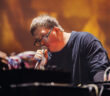
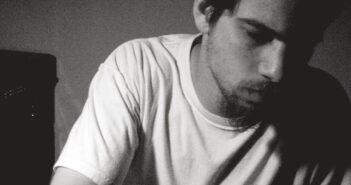
Tortoise’s Jeff Parker is exhausted, having arrived home at 4am following a four-hour drive from a gig in Bloomington, Indiana. The gig was with Josh Abrams’ Aesop Quartet. The quartet consists of Parker, Abrams, former bass player in The Roots, with Cologne-based trumpet player Axel Dorner and saxophonist Guillermo Gregorio. He was back up at 8am to look after his two-year-old daughter Ruby. “Woah...” he chuckles. Ruby makes sure she gets plenty of attention throughout the interview, chiming in with songs, shouts, and occasionally wrestling control of the phone from her father, piping in to ask for a turn.

Like his daughter, Parker knew what he wanted from a very young age. Immersed in the sounds played around his parents’ house in Hampton, Virginia, Parker wanted to be a jazz musician. After a year’s worth of piano lessons, he picked up the guitar at age nine and started learning basslines from Earth, Wind & Fire and Funkadelic songs on the radio. His parents eagerly signed him up for guitar lessons. After time in a handful of obscure high school bands playing “generally modal music, rock and jazz... like Santana without the singing, and rock bands that played like ZZ Top and Led Zeppelin”, he took off for the Berklee College of Music in Boston. After four years of study, he quit just before graduation, frustrated by the controlled learning environment and conservative approach to the music he loved.

Of course, studying is about learning the technique and theory of the music. But Parker thought the musicians at Berklee had a narrow perspective. It wasn’t alive the way he’d experienced as a kid, and the musicians were more focused on honing their technical skills. “I spent a really good part of my professional adult life in reaction to the conservative atmosphere. For years I wouldn’t even really even identify myself as a jazz musician. Even though it was my background and I wanted to be a jazz musician from when I was a little kid, I mean now I’m fully admitted. But I made a conscious effort to disassociate myself with the jazz aesthetic just because I felt there were too many limitations imposed on that music. People don’t buy jazz records anymore, they don’t see the music, because so many musicians are so self-absorbed and the music is so intellectual on many levels. The way that it is perceived by the public, as well as the way the musicians look at it, it’s like this elitist thing. I don’t think it should be like that.” This hierarchical approach that places jazz above other music is reminiscent of the one that used to put classical music above jazz.

“I hate to put it like this. But all the categories! Creative people are just going to reinvent the music. That’s just what’s going to happen and eventually it’s just going to end up being called something else. Most people who think of jazz, or even rock, have a certain sound they expect and associate with it. Everyone in Tortoise, just because of our backgrounds, excluding mine, considers Tortoise a rock band because of the way we come up with songs. Even though we might sound different, essentially that’s where it comes from. Because all those guys played in punk rock bands from when they were 16 years old. Even though they were checking out a lot of different stuff and had a really open conception of music, in the social realm, that’s kind of what we identify with.”

After college Parker spent time playing improvised music with George Garzone (now an Associate Professor at Berklee) and Antonio Hart before moving to Chicago in 1991. “I didn’t move here because of any scene. I moved here to work and was planning on staying for a couple of years then moving to New York.” Despite this, Chicago proved fertile ground for Parker. “I just kinda fell in with this crew of people... Chicago is a good place if you’re trying to find your way because the local musicians, the local scene, is really supportive. Between the club owners, the audiences and the record labels here it just seemed like a really good place to work to really find your niche. And that’s what I was looking for when I had just come out of college. I wasn’t quite sure what I wanted to do, I just knew that I wanted to do something different, and fortunately I fell in with a group of people who saw things like I did.”

Parker’s technique has been described as playing the guitar like a saxophone. Whether it’s straight-ahead, fuzzed-out, abstract or mysterious, he always creates a beautifully toned, textured sound. “I used to listen to a lot of saxophone and I spent a lot of time not necessarily trying to make the guitar not sound like a guitar, but more around the phrasing. I’ve always had a kind of linear approach to the instrument. I was always very concerned with the sound and the fullness of the tone. And when I was in college I liked a lot of guitar players but I was really into saxophone players such as Sonny Rawlins, Charlie Parker, John Coltrane and Lee Connit. So I would just approach the instrument more like that until I came up with a way that was comfortable and felt like it worked.” Since leaving Berklee, Parker has continued to refine the sound. “I think it is a lot clearer now than it was 15 years ago,” he says.

Chicago is a cold working class city – the meat-packing and grain industries are big employers – and it doesn’t jump out as a centre for wild musical ferment. But combining the legendary sixties jazz collective, the Association for the Advancement of Creative Musicians (AACM), and the eighties indie boom that led to the formation of labels such as Touch and Go Records, it’s produced a thriving music scene. By nurturing the free spirit of jazz, the city now sees the thrilling results of collaborations between avant-garde musicians, electronic producers and indie rock hacks. And outside of that there’s so much else happening – house, hip hop, gospel, classical, hardcore and electronic.

“When I first moved to town I did some gigs with a drummer named Larry Banks, and Ernest Dawkins, a saxophonist. We got to talking and Banks had some of the same ideas, and I think he liked the way that I played. He’s a little older than I am, he had his own band that was pretty established in Chicago and he asked me to play with him. He’s a very prominent member of the AACM in Chicago and I got affiliated with the organisation, met a lot of other musicians and started playing with them and collaborating. Cats like Fred Anderson.”

With Charlie Parker and Lester Young’s influence on his guitar playing it must have been rewarding getting the chance to play with Anderson, who said in a recent interview with www.jazzhouse.org that he’d seen both of them play. Described by Jazz Times magazine as ‘the foremost underground avant-garde sax player today’, Anderson was a critical player in the germination of the AACM back in the 60s. In the jazzhouse interview he explains his reasons for working with (Jeff) Parker by saying, “he hears the music right away. I can play with him because he has such good ears and he picks up on it for a youngster.”

By the end of the ‘90s, Parker had established a reputation for involvement not only in Chicago’s rich avant-garde music scene, but also for captivating performances and recordings with a swathe of indie rock musicians. He’s now 37 years old and has played with several generations of jazz musicians including Roy Hargrove, Wynton Marsalis, Joshua Redman and Branford Marsalis, as well as Fred Anderson, Lin Halliday and Ken Vandermark. He’s also worked with musicians from very different backgrounds. He began in the city playing hard bop and free jazz with cornettist Rob Mazurek and drummer Chad Taylor as the Chicago Underground Trio (which is sometimes extended to form the Chicago Underground Orchestra). Mazurek and Parker also played as the art-rock/jazz-funk outfit Isotope 217 alongside trombonist Sara P. Smith. He’s played with bands like Ernest Dawkins’ New Horizons Ensemble, Uptightly, Aesop Quartet and Tricolor, and released his first solo album, Like Coping, last year on the influential Delmark Records label.

“They’re all just friends.” Parker commented on working with such a diverse range of musicians. “I actually introduced Rob [Mazurek] to the more creative part, the more creative side of the Chicago music community – I mean he was a pretty straight-ahead jazz trumpet player when we started hanging out. I got him into free improvisation and eventually that led him to electronic music and such. It’s inspiring to be in a community of musicians who have so many great original ideas and great voices on their individual instruments and such.” The extent of cross membership of bands makes the Chicago scene seem like an incestuous musical family tree. In some ways it’s reminiscent of New York’s underground in the ‘80s. Like the collaborative network around Branca, Laswell and Zorn, Chicago has had an amazingly prolific output of experimental and often brilliant records that, in reality, few people will ever hear.

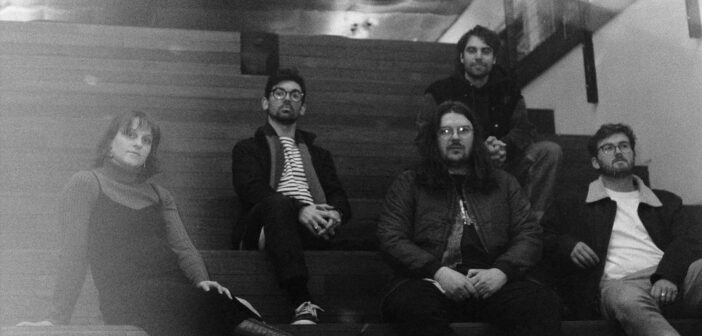
It’s probably his membership of post-rock outfit Tortoise that Parker’s best known for. He joined Tortoise prior to the recording of their ‘98 album TNT, replacing bass player Dave Pajo (formerly of Slint and now Aerial M/Papa M). This cemented the lineup with John McEntire on percussion and keyboards, John Herndon on keyboards, vibraphone, percussion and programming, Dan Bitney on guitar, baritone saxophone, keyboards, vibraphone, marimba, bass and percussion, Doug McCombs on guitar, lap steel guitar and bass, with Parker on guitar, vibraphone, electric harpsichord, synthesizer, keyboards and drums.

Skirting the boundaries of rock, jazz and electronics, Tortoise make complex and melodic music that probably bears the closest resemblance to jazz than any other musical genre. Despite (or perhaps because of) his musical background, Parker categorically disagrees with Tortoise’s music being described as jazz. “There’s no improvisation. I think the biggest thing is the way that we blend the instruments or the way that we look at the way the individual instrument’s function in the ensemble. I think that’s what makes people compare Tortoise to jazz they’ve heard. But there’s absolutely no improvisation in Tortoise’s music. And that’s the number one characteristic of jazz.”

Since forming thirteen years ago the band has continually redefined their sound. They’ve just released a fifth full-length album, It’s All Around You, while the band’s members play and record with a bewildering array of other bands. Think the beautifully complex sound of the Sea and Cake, Bowie-style glam rockers Bobby Conn Band, Eleventh Dream Day, Gastr del Sol, Come, Sonic Youth, Him, Smog, Stereolab, Red Krayola, Tricolor and 5ive Style just to name a few. Suffice to say, they’ve had a profound impact on the indie rock scene.

After three years coming to grips with McEntire’s new Soma studio, Tortoise released Standards. It was a step back from TNT’s computer-based production, and though it was dismissed by many as little more than a Bitches Brew outtake, it had a more organic feel than previous albums. “Standards wasn’t a ‘live’ live album, but most of the performances were live,” comments Parker. “Of course, there was a big process behind us getting to the point where we could play the songs with everyone at the same time.” It’s All Around You combines the cut and paste aesthetic of earlier albums and the organic, musical elements of Standards to form possibly their most developed album to date. “The process for recording the new record was actually a lot closer to TNT, we went with no material and made everything in the studio. John McEntire’s getting these really distinctive tones [at Soma] and I think he was just discovering how to do that when we did Standards, it’s a lot more refined now.”

Tortoise have long flirted with electronics, though it rarely does more than peek out from beneath the sparkling melodies and rhythms. But software and the technical aspect of production have been an extremely important compositional tool for the band. “I don’t know what we would do without it [Pro Tools],” Parker laughed. “Tortoise is essentially a studio, and we’re a studio band. I mean we love to play live, but this particular aggregate of Tortoise, we come up with everything in the studio, that’s how we write all the songs, everything is based around us experimenting in that environment. So at least for me, it’s hard to even imagine what our band would be like without the innovation of hard disc recording.” This was also part of the reason for the gap between TNT and Standards, as they spent a lot of time in the studio getting to know the software. “Nobody was really using it when we did TNT, so we went in with totally cold feet and were learning as we went along.”

On earlier albums, Tortoise extended their electronic romance with remixes from producers like Oval, Coldcut, Autechre, Derrick Carter, Springheel Jack, UNKLE, Wagon Christ and Techno Animal. These days they are less interested in that sort of collaboration, though Parker has been listening to a lot of hip hop. He worked with Chicago rapper Diverse on his excellent One AM album, and they’re currently completing a new project together. He’s particularly excited about the current wave of producers and MCs reworking the rich vein of jazz history. “That Madvillain record is awesome. Oh man, I love Scott Herren, Prefuse 73, Madlib, MF Doom, Jaydee. It’s refreshing to hear. One of my favourite times in music was early ‘90s hip hop – you know, Tribe Called Quest, where they were sampling old Blue Note records and stuff. It’s really nice to hear it coming back, but in a completely different way.”

Like the Native Tongues, Tortoise have always searched the past for inspiration. But the LA Weekly summed up popular feeling in 2001, saying “it’s difficult to decide whether Tortoise are capable of creating their own riches or can only mine the past”. Whether it’s Ennio Morricone’s spaghetti westerns, Neu and Can’s machine funk, the minimalist work of composer Steve Reich, or musicians like Lee Scratch Perry, Herbie Hancock, Dick Hyman and Jean Jacques Perrey, there’s no doubt Tortoise have borrowed liberally from their heroes. Parker considers his words for a moment before saying “I think whatever you’re checking out at the time inevitably filters it’s way into whatever you’re creating. It’s just a thing that’s true for all art and artists. I can definitely listen to our past work and hear the influences a lot more clearly than when I listen to this new record. We’re kind of coming into our own, really developing our own identity. That’s apart from all of our influences, in my opinion, when I listen to the new album.”

At this point Parker’s daughter Ruby has a tantrum, screaming and generally needing attention. “I’m going to have to talk fast,” he said “because my daughter’s starting to get pissed off that I’ve been on the phone so long.” While juggling the phone and Ruby he quickly gives his take on file sharing (bad for artists/labels, especially mid-level acts like Tortoise, but also capable of encouraging artists to be more self-sufficient and concentrating ownership with artists instead of labels). And then he’s gone. Whether you call it jazz or not, Parker has created a body of work that’s unique and new, from a diverse range of influences and sources. His thirst to play and create with a dazzling range of musicians from different backgrounds marks him as an important player in modern music. Perhaps in the future, we’ll see his name quoted alongside some of the names he mentioned such as Charlie Parker, Sonny Rawlins and Fred Anderson.