




Issue #005 (September 2003)
John Jacobs - Organarchy
Email this article to a friend

Interview by Vaughan Healey

For every action there is an opposite and equal reaction. That boring Newtonian standard you learnt in high school could apply to humanity as much as science. There is a constant tug-o-war between people and the institutions that civilize us. So for every phenomenon like, say, peer-to-peer file sharing there are corporate and legislative attempts to shut it down. And those times when business tries to erode our collective decency, or for those attacks on civil liberties (or foreign countries), people come together and try to keep those monoliths in check.

Activism and protest is a process with no clear beginning or end: people pose arguments, those ideas infect other people and the process repeats itself. Change is made through people working together, through groups and collective effort. However, those unions are constructed through the actions of individuals, progressive artists and thinkers who explore new possibilities in both political and musical arrangements.

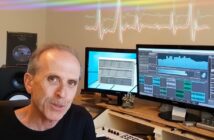
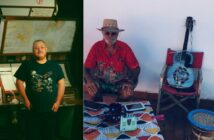
John Jacobs has been an important part of argumentative thinking: through groups like the Jellyheads and Vibetribe, techno agitators Non Bossy Posse, video manipulators Subvertigo, and currently ‘The Night Air’ — a weekly radio program on Radio National. These are projects that have evolved and fed off and into each other, providing ideas and momentum extending beyond the powering down of amplifiers at the end of a protest.


Cyclic Defrost: Tell us a bit about what was happening outside the Sydney Stock Exchange in 1988, with the Media Liberation Front
John Jacobs: At the time there was a lot of debate around the ownership of media as Alan Bond was attracting a lot of money and investing in lots of media companies. I was working at Radio Skid Row and JJJ at the time, and me and some colleagues felt like we wanted to comment on it. We got together and dreamt up this fake organisation: the Media Liberation Front (MLF). We felt a bit of a spoof, a media splash, would be a good way to go. We put out a press release, hired a generator and some guitar amps, dressed up in silly costumes and printed a leaflet which had the words of the songs that we were going to sing which were commenting on the situation…

When we started making our music, the city officials weren’t so onto that sort of stuff at that stage, so they took a long time to respond to it, which was great. It enabled us to get a whole set out and a lot of lunchtime people were there. We were handing out our lyrics that were talking about media ownership and we had good fun with big posters with ‘Alan Bond: Wanted for Crimes in Chile’ across them, because he had lots of investment in Chile with his conservative friends there.

We had a generator but we were actually able to plug into a wall, which would be under lock and key today. When the security guards actually came we moved into the public space and they had to get the police involved to shut it down. By that stage, there was a media circus and lots of cameras. Then we could have a dialogue with the police person who was trying to stop us from doing what we were doing. We were talking about how they were silencing the voice of the public and this is allegorical to the whole Alan Bond situation. The poor policeman – he didn’t have any media theory and didn’t really know what to say, he was quite stumped! Tony Collins, who was our media spokesperson, managed to score a lot of points there on-camera, putting the point of view out to the people in a fun reclaim-the-streets kind of way.

CD: What would you try differently for the same sort of stunt today?
JJ: Well, then we were playing punk music and shouting lyrics with loud guitars, so that is immediately alienating to lots of people; it’s very angry. I think these days, if I tried to do an Action, it would be more mainstream in our cultural presentation, trying to really connect with the people. I think that giving out the leaflets was a good idea, but to provide true entertainment for them and then to say through the back of that ‘this can be the building of something different,’ or ‘we can draw you attention to something different, but lets have fun first.’

CD: That seems to have become very important in protests: activists trying not to alienate the public.
JJ: Because the public are alienated from themselves already. You have to bridge across to them and make a connection straight away.

CD: But it’s often not enough just to be doing stunts, you have to really engage with hearts and minds.
JJ: But a stunt can be good just to break through. I think a good one at the moment is the Women in Black protest. It’s not really a stunt, and it’s not entertainment, they are just women in black clothing standing with one simple sign. By being silent and not saying anything at all, except for providing a small spectacle. It really gets to people, because they are used to a big sound system or funny street puppets or noise. This is such a contrast. I think we have to try all things at once — shock, happiness and disorientation to break through.

CD: Is it harder to get peoples attention because we are so saturated with stimulation?
JJ: You could say it’s harder, but it’s also more than that. Old tactics have to be re-vamped at all times because everyone looking at everything going on. If you want to break through and do something different, you’ve got to work out where the fault lines are, and they are always there, and kind of shift them a little bit, but always keep your eyes open. So is it getting harder? I don’t think so, it’s always been a challenge.

CD: So how did the MLF develop into the other groups: Jellyheads, Subvertigo, Non Bossy Posse?
JJ: All we were trying to do was have some fun and say something, and that was through punk music. As soon as disco tuned into techno, we thought ‘Better get onto this!’ That was the crack — you could put words onto the frequencies and your message becomes very clear. There was a lot of cut-up suddenly appearing in popular culture so it was a real opportunity to put media detouring into a form that was available for everyone, and that they could enjoy in a party context. When we started working in the early 1990s, people really wanted to come and see it. It wasn’t like punk, screaming from the edges; suddenly mainstream culture was saying, ‘let’s dance together!’ When we started we had some samplers and equipment and hooked up with DJ Morphism, whose famous quote is ‘reggae saved me from heavy metal’.

CD: What about the video stuff?
JJ: As things were changing all the time you just took the tools to hand, so we were doing video cut-ups and dubbing them onto the end of hire tapes, but that wasn’t really getting out to anyone. Suddenly, dance parties had big video screens so we thought, ‘What happens if we put words or bits of the news, or ads, or our own footage we’ve created, and make a news broadcast at a party?’

CD: When you were doing this, there was a lot of overtly political new
techno music happening with groups like Consolidated and what was happening
in the UK, things like the On U Sound…
JJ: The whole soundsystem thing was very exciting. We were interested in Jamaican street parties, soundsystems and the community based events that were being generated around sound systems. That’s what we were doing with Jellyheads in a way. Not in a very informed way, but that was part of the process.

CD: So this was happening at the Jellyheads warehouse in Chippendale and RSR fundraisers in late 1991?
JJ: The council didn’t really know what we were doing and didn’t know how to shut us down. They thought if they could cause a riot that would be a good excuse to get us to shut down, so the cops raided and caused a riot. The cops came on stage at the peak of punk band Toe to Toe playing and there were 300 really tanked up and raging punks there. They just came in with the dog squad…

So eventually we got shut down. That was okay though, because although we didn’t have a venue, we had a sound system and we sort of had an idea: techno. People come to this stuff and enjoy themselves, so after that Sydney Park became the venue. Vibetribe was the group that formed out of the demise of Jellyheads, and they started putting on free parties there. There wasn’t any venue for the more freaky fringe dance stuff to happen, so this was a point where a lot of people were coming together and got to hear a lot of different other stuff.

CD: Is it fair to say that those movements were confined to the inner city:
art school wankers, gay and lesbians — things that are held in suspicion by the suburbs. Was there any thought of doing anything outside of that inner-city clique?
JJ: Hiphop was the key for that, but we didn’t have that key. And as much as we talk about a ‘social movement’, really it’s about people having fun and entertaining themselves; that’s what people come to this with. You might have a progressive agenda and you might think that you are a revolutionary, but really you’re just a person who wants an enjoyable life.

CD: And DIY was a big part of it — building equipment?
JJ: Yes, and the parties as well. I was fortunate enough to have a bit of a blend of skills, one of which wasn’t music, which kind of helped in a way! I was the lead guitarist in the band but couldn’t play a note. I had it open tuned so I could make a chord by barring one finger across the neck, and I had all the notes written so I could see what I was doing. After that, it was great to make techno music, just made by machines. I can relate well to machines, and drum machines and samplers were a good and easy way to do it.

CD: What about the Wheelie bin sound system?
JJ: Originally, I had a big movers’ trolley that had a big lead acid car battery and a car sound system on it. We also had things like TVs in prams, when we were doing the Community Activist TV stuff in Newtown, so there were antecedents there.

The wheelie bin was perfect. It’s light, well balanced, has handles, looks innocuous, and you can find them on any street corner. They are plastic so they are easily to work with — you just carve it with a knife and it’s kind of the right shape to make into a speaker.

I was making speaker boxes for the back of my bike, and I was kind of baffled by science, trying to make a good sounding speaker, with the right sonic stiffness and heaviness. I was coming up with stuff that would almost tip my bike over as I tried to ride along. I had cops pulling me over telling me that I had to turn my sound system off, and I would ask them ‘Under what law? No one else is complaining.’ The bin gets used all over the place: Reclaim the Streets, today it is at a GM protest.

CD: Politically, things today seem to be worse than ever. There is more state oppression and less community power. What can you say about that?
JJ: We’re not heading towards a police state, that’s just what they want you to think.

CD: What about the anti-war demos: that collective effort amounted to nothing.
JJ: I don’t like it when people say, ‘We are going this way,’ because this has been happening for a long time, it’s constant. Yes, there is a lot of bad stuff going down but let’s remember: in the First World War, there were also thousands of people marching in the streets against it. The Workers of the World were framed up in Sydney for arson and went to jail.

I do think that there’s hope. It’s very important to not get too negative, because that is used as a tool to keep us down. I am reading a book that mentions Julius Caesar talking about the ‘pacification’ of Gaul. People think of doublespeak as a new invention with media manipulation, but bad ideas have been happening for a long time. And they are the same bad ideas; it’s not as if the forces of evil are coming up with new shit. What we have to do is keep community memory alive. Keep a memory of how they have been bad, but also all the good techniques that are available to us — things like the wheelie bin.

CD: So what do you think should be an artistic response to what is happening?
JJ: Stay informed, be critical, be positive, entertain and educate. Draw parallels and show how things have happened before. Show how things can be so ridiculous — how Ruddock is a corpse on legs, show how John Howard is a lying bastard. These are simple things that anyone can connect with.

CD: Has community memory been lost? Look at the peace march. It was amazing for the diversity, but it shouldn’t have been amazing, because it’s evidence of people from all over and their similar thinking. Are we just disconnected from that sort of community memory?
JJ: To counter that, we just have to keep connecting. I like to surf the net, and put some weird shit in Google, and you will find that stuff is actually happening somewhere. Go there and look and support what they are doing. Just try to connect with people. Next time you go to a party, talk to someone. If you think the music is crap, tell them and you might be surprised what they have in their music collection.

CD: So far, what we have been talking about are the sorts of things that are happening across the world. What do you think are the particularly Australian questions we face?
JJ: It’s how we sit as a colony, and how we sit with recent arrivals. Our relationship with the big powers right now: how we’re in Asia but we think we are really European.

CD: Is that colonialist deference to larger powers part of our national character? How do you get over it?
JJ: By celebrating local initiatives, by making cross-cultural connections to break the one way flow of energy, and documenting what we do. For example, if I had a choice between an Australian accent or American accent, I would always choose the Australian when choosing a voice sample to add to the mix. If I have a choice between a man and a woman, I use the woman. They are the big currents we are talking about, so let’s use the counter-currents and swim against the stream. Those are very do-able things, but the pressure is always against you.

So now, I am trying a non-dancefloor act, kind of like radio in a venue because dancing is one thing and thinking is another, and they are not necessarily connected. I’m looking around for material to use and it’s not easy. There is a lot of good material out their, like independent American and European films, but I want Australian voices. When confronted with the choice between strong material and not-so-strong material, it’s hard to make the choice to go with the not-so-strong but politically correct. I think that’s something that plagues political art with the emphasis on the message and not on the delivery. You appear a bit half-arsed, or a bit dorky, or a bit pointy-headed or bleeding heart. It’s hard work to go somewhere strong and powerful with a clear voice because Australian’s don’t sound totally confidant. Listen to Australian hiphop and it’s hard to find really a blasting and clear lyric: it’s always a bit hidden and mumbled. It’s like we are not comfortable with the Australian accent.

CD: How did ‘The Night Air’ happen?
JJ: The idea behind this one is that it’s a remix show. It’s something I have wanted to do for a long time. They used to let me do a show called ‘The Works’ late at night on JJJ, before it got nationalised, which was a cut-up show; making a new story out of the bits and pieces, a collage. So now we have convinced people it would be a good idea to have something similar on Radio National and we have ‘The Night Air’.

CD: The cutup aesthetic is very enduring, it’s been around for ages but it has really taken off over the last couple of years. The tools have become cheaper, and it’s easier to do.
JJ: It’s so easy to copy now. People have wanted to work like this for years — Negativeland, Burroughs, Sergei Eisenstein cutting up film, right back to the Dadaists. It’s so easy to do and it’s not necessarily the intellectuals or those with a political vision doing it. Anyone who has got a computer that it halfway decent is laughing themselves silly bringing two different tracks together. That really pushes the creative spur on: untrained people making things. You hear some of the weirdest combinations, and initially go, ‘you can’t do that,’ but after three bars you go, ‘I love it!!’ Of course, mainstream culture has pricked up its ears and is doing two things about it: they are trying to stop it, and they are also trying to sell it back to us.

They keep running those rear-guard actions with stories about kids getting arrested at universities, but you can’t interview these kids, noone is talking to the media. Is anyone getting arrested or fined? I don’t think so. The other side is that they are madly trying to sell the aesthetic back to the public. The monoliths are slowly starting to fall apart.

CD: Do you think that Kylie doing a mash-up actually promotes it? Do kids who wouldn’t hear about it otherwise get turned onto it?
JJ: Definitely. On the one hand it shows people who don’t have access to the underground media what to do, and on the other hand it shuts off the back-end and forces people to shuffle along a bit further and a make things a bit wilder and crazier.

The other thing to mention is the challenge Madonna put out to the file-sharing community. People thought they were downloading her new album, but instead were only downloading her voice asking, ‘What the fuck do you think you are doing?’ She did it in a bad, unfriendly way and it generated a lot of bad energy. Then people started remixing that file, so now there is a whole scene of ‘what-the-fuck-do-you-think-you-are-doing’ tracks. A lot of creative energy was devoted to that. It forced the debate, and she used the tools of filesharing to debate the matter. And she was asking a question, making people think about what they were doing. ‘What are we doing? Let’s think about what are we doing.’

CD: You can never really anticipate how people are going to use technology, or how technology will affect us as people take it and exploit it in unusual ways.
JJ: That’s the greatest technology we have: the human mind. It’s a bottomless pit of creativity, and there is always another combination lurking in there. There’s no more new music, but there’s always a new idea of configuring that music. But we have to keep moving and changing it up.

CD: So what sort of ideas do you work with in ‘The Night Air’? What are you trying to prove?
JJ: That you can draw connections, and you can bring disparate elements together to tell a new story. I like taking characters out of documentaries or dramas and putting them in other pieces. What happens then? Radio is about imagination. Because there’s no picture there, you have to invent all this other stuff, so the listener’s mind is opened in a way that it isn’t in a visual medium. The audience wants to be entertained and involved, so if you give them little puzzles and conundrums to be solved, repeating leitmotifs, then they make sense of it. Other producers work a bit differently, but I like to be a bit psychedelic and surreal and open-ended. A good ally in the process is space: giving the listener the gap where no one is talking.

CD: The complete opposite of commercial radio that has constant voice and noise, accentuated by the amount of audio compression. The ultimate taboo on commercial radio is not swearing or treason, it’s dead air.
JJ: They hate the listener, and they hate their brains. They don’t want the listener to do anything for themselves.

CD: Do you think that the aural space corresponds to mental space?
JJ: Absolutely, it’s the mind of the listener. It’s sort of what the dancefloor is like: you need that space. That space isn’t necessarily dead air, it could be instrumental. In contrast to other radio documentaries, I’m not trying to tell too many stories; I’m trying to give people little windows to tell their own stories. It’s like a train tearing along outside and you get glimpses through windows into peoples houses and what is in there, and then the gaps between peoples houses.

CD: So if you suddenly had unlimited resources for a radio project, what would you be doing?
JJ: There was an amazing program on Italian television called The Blob that was very inspiring. Even the use of the name got my nerve ends tingling! It was television, live feeds as well as the whole week of that broadcaster’s tapes all edited together. They must have had plenty of people to do this, enough editors to churn through all that stuff. I would like to have all of the Radio National output remixed into a half-hour, and have enough people to do in it a sensible way. At the moment we only have two people making ‘The Night Air’; we do what we can, but it’s always a bit of a shadow of what it could be.

I would like the ABC have a frequency dedicated to mashing up the media. In a different legal framework it would be great for everything available, all media outputs, to be remixed into one slot. That’s what I want and its not quite happening yet, but it will when someone knows how to program it and market it properly, something like an internet place where you can go and there is a kind of chaotic, edited, portal that brings together lots of text and visuals and sound that is a sort of freefalling cut-up…We do say that ‘The Night Air’ is radio for the Google age. That’s where peoples’ heads are at.

‘The Night Air’ is unlike anything on the wireless. For 90 minutes on Sunday night [8:30pm], Radio National becomes decidedly non-linear. ‘The Night Air’ is orchestrated around themes and ideas, with sounds and dialogue liberated from conventional form. Conversations are created between people and sounds in loose stereo documents and each weekly subject is explored with a unique stethoscope. It might get called ‘post-modernist’, but its not. In the synaesthetic approach of ‘The Night Air’ lies the ultimate, modernist, radio democracy. It is purist radio that treats all material as texture, where there are no demarcations between voice, music, silence and sound. It’s the also most visual radio you will ever experience.


jj.jpg
 
jj pirate.jpg
 
nonbossyposse.jpg
 
greed bin.jpg