


Issue #012 (September 2005)
Dreamies
Email this article to a friend

Interview with Bill Holt by Lyndon Pike

Sunday morning song
Flashing in my eyes for all to see
Sunday Morning song
Take me on to sleep and I’ll be free
Lyrics from“Sunday Morning Song “ from “Program Ten”
-Bill Holt

In 1972, Greater America was feeling the effects of the war in Vietnam, the heat of political upheaval and the burgeoning social melting pot that followed the young counter culture’s faded revolutions of the mind.

One of the nation’s future sonic visionaries, Bill Holt, was a happily married company exec with a family and a foothold on the corporate ladder via his job with the global giant that was the 3M corporation. One day, Bill armed with a love of the Beatles and Neil Young, decided to give up his trajectory career climb and dedicate over a year of his life to the creation of one of the most remarkable and startling recordings to come out of that our any other decade – “Dreamies”.

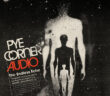
The story of “Dreamies” is largely untold, as I guess is the recording largely unheard by most ears. I chanced upon the intriguing album cover several years ago whilst working behind the counter at Redeye Records second hand store here in Sydney. It’s bold statements promising “…a new form of personal entertainment, a splendid time is guaranteed for all” and that it was“100% Recommended For A Beatutiful Electric Journey Into Your Imagination” was enough to convince my psychedelic sound loving mind that I should investigate further.

The album consists of two 25 minute tracks, entitled “Program Ten” & ”Program Eleven” - the titles inspired in part by the Beatles “Revolution No.9” from the White Album. Within these two compositions sit three songs: “Sunday Morning Song”, “The User” and “Going For A Ride”. The songs are sung by Bill in a mantra-like cyclic structure with Lennonesque vocal treatments, hypnotic repetitions and thoughtful, personal themes based on emotions, dreams and escapism. Repeated listens bring out new feeling within the songs, which are on first listen almost overridden by the astonishing sonic collage that accompanies them.

Long before sample based music was a part of the popular landscape, Bill was pioneering the use of spoken word taken from television, integrating the sounds of kitchen appliances long before Matthew Herbert, and defining the avant pop treatment of how a “normal” song should ever be considered. The swirling, squawking Moog synthesizer accompanied by the strummed acoustic guitar along with political speeches from Nixon and Kennedy (and even a small section grabbed from the Beatles’ “Sgt.Pepper” thrown down deep in the mix) create a tapestry of psychedelic otherness. It is, to be sure, a real trip.

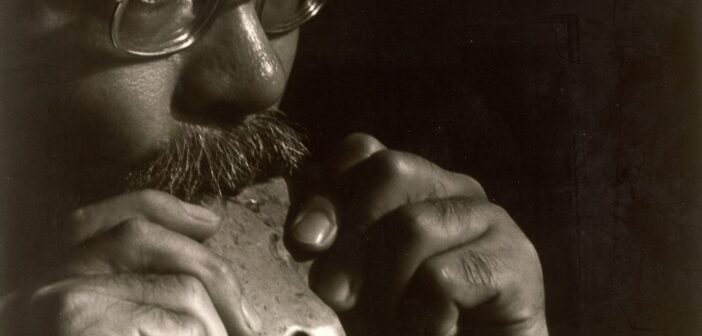
I spoke to Bill, an entirely affable and humble man earlier this year and he shed a light on the project that he created some 33 years ago. I asked him about the origins of the album and the mindset he was in at the time as well as the recording process and his own dreams and visions….

“The inspiration for me to make the album was, I guess, the freedom of the times itself. Prior to the 50’s and 60’s, music seemed incredibly straight. Then, the 60’s expressionism of “do your own thing” enabled me to have the courage to put something like “Dreamies” out. Prior to that I probably would have been carted away for treatment!”

“I was, at the height of the counter culture with LSD and Timothy Leary and the like, essentially a pretty straight guy. I was a family man with a wife and a job and was never involved in any of the major hippy scenes. That’s not to say there was not some ‘erb floating around at times!”

“Making the album was a lot of fun for me and a reflection of what was going on around me. I had a great career and have sometimes wondered what would have happened if I had stayed at my job with 3M, but I gave it up as everyone around me seemed to be having more fun than me and my briefcase. Being young it was an opportunity I felt I could take. Sure, it was risky, but that’s what life is about – closing one chapter, starting another and always chasing your dream.”

“Part of my dream was hoping that “Dreamies” would have more of an impact in terms of commercial success and recognition. I think any serious artist in the back of his mind has an ego & hopes for fame and fortune through his art. I was disappointed in that aspect, but I tell you, lately, to know that the album is still alive and that people still appreciate it gives me a tremendous thrill. I get more comments today then I did back then, so I’m almost getting the satisfaction, although not the commercial success or the money. But hey, here’s a guy ringing me from Sydney, Australia…it doesn’t get any better than that!”

“People might listen to the album and think that it was jumbled together, but in fact it was very meticulous. Every sound you hear was placed very carefully. Today, we think of cut and paste techniques as a result of a computer programme. I would physically cut the recording tape and paste it together myself. It really was wired together with a lot of thought and tender loving care – every minute of it.”

Bill recorded the entire album from the depths of the basement of his home in Claymount, Delaware. He would work late into the night, coming up with the creative parts. He would then rest, and with the new days’ dawn and a clear head, he set about the mechanics of it – the cutting and pasting or as Bill puts it “the real heavy lifting”.
“Another thing which enabled the album was my interest in technology. Back then it was the Moog Sonic 6 synthesizer that caught my attention. It was a portable suitcase sized device with about a hundred knobs that could emulate almost any sound you could imagine. At the time not many people were using it and I thought it was just great.” Along with his acoustic guitar, the Moog served as the main instrument.
Bill was wildly experimental with its use and he also included on the recording “a whole heap of…different stuff”(namely the afore mentioned found sounds and “samples”).
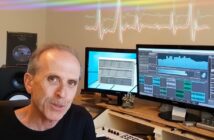
Today bill runs his website of politically charged and satirical video art – still utilising technology and computers to juxtapose vision and sound, all the while commenting on society and life itself. It was real a treat to talk to a maverick artist such as Bill Holt, a man who wasn’t afraid to take time out from life and follow his dream(ie)s.