Issue #009 (November 2004)
A Brief History Of VJing in Australia
Email this article to a friend

A Brief History Of VJing in Australia
Interviews and story by Sean Healy, editing by Aparna Khopkar

Trace the current live pixel boom back from ravelight to cavelight, and music will always be found dancing with imagery. Even musical notation is a visualisation, and a rich lineage of shadow puppetry, sideshow carnivals, tweaked oil lamps, slides and album cover art attest to the historically interwoven nature of music & imagery. Live visual tweakage got a kick out of the last decade though: with real-time video and graphics manipulation possibilities soaring thanks to a shift from C64 to P4 & G5; the emergence of laptops capable of broadcast quality video edits; delivery of a dizzying array of time-melting and splicing audio and video software; and web connectivity. This issue of Cyclic we will profile some of the Aussie Pixel Battlers who rode that wave in.

Lest We Forget
Large machines were needed to carry video processing gear around back in the day. If you enjoyed some magic moments of AV synchrony during some of Sydney's RAT parties, Vibe Tribe parties, Melbourne's Centrifugal events, or Summer of Lov-ish warehouse shenanigans – chances are a few people lost weight carrying in the rig needed to make that happen. And the gear of course, wasn't exactly 'plug n play', more often than not a cobbling of whatever could be scraped up then synchronised with mental elbow grease. Or else it was invented.

AV pioneers such as Severed Heads; the hardware-modifying 'Video Subvertigo'; and the Australian Fairlight company (which made the CVI video processor) should all be recognised for having risen to the challenge of invention – each contributing much to the growth and potential of the live video community in Australia. Alongside them, several key artists contributed to the evolution of live video in Australia, and it’s a pleasure to present some interview responses from the majority of Australia's finest live visual aesthetes, experimenters and epilepsy-inducers of the pixel decade past.

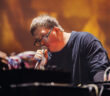
TOM ELLARD
The enigmatic lynchpin and frontperson for Severed Heads, with an embarrasingly large back catalogue of mashed & mutant audiovisual material.
Ellard was testing the limits of computer-based AV technology before many current DJ/VJs were born and is heavily cited as an influence by many. He continues to release new experiments at his www.sevcom.com site.

Early Inspirations?
Film effects - of the sort created by Douglas Trumbull by exposing light to film through lenses. My brother and myself tried to recreate them long before video was an option. Example: my brother built models and photographed them as 35mm slides. The slides would be projected onto a screen and a skateboard used to move the projector! Then they'd be reshot onto 8mm film. This was the early 70s.

Early Inspirations?
Placing mirrors on a turntable and shining a light on them - 1974. I read up about light boxes but the motors had to come from America and I was too young to work with perspex! I tried to use computer graphics in 1977 using a TRS-80 but there was a long way to go.

What equipment did you start off using?
Slides. Most music audio visuals were done with slides - e.g. The Reels and the Human League. They were the only things bright enough - video was far too feeble. Computers started to get places with the Atari 800, but still, as a source for slides. Film loops - 8mm film fed through a projector and then joined into a loop.

Favourite moments?
Usually when we introduced a new mechanism - video synthesiser in the early 80s or OpenGLrendering in the early 00s - and the results jumped 'up a level' if you know what I mean. Suddenly there was a new potential. We've done so many live shows I find it hard to pick out a specific date! Also the first time you use something isn't always the best. The video projector at a gig in Laibach, Yugoslavia looked exactly like a Dalek. Three gun Dalek. Some venues have video installed all around - and when they let you plug in - it's wonderful. The advent of LCD projectors was a godsend after years of 3 gun clunkers.

What you don't miss about the 'early days' ?
Carrying 26 inch monitors up the stairs - and down again at the end of the night.

Old gear vs new gear comparisons?
I can't define a point at which gear went from old to new but I can say that a point occurred when abstract visuals became concrete - were images of known things. That state change has occured a few times in different working methods - in computing it came in 1987 with the Amiga and DigiView - but in live graphics it came later (people were still doing mandelbrots much later). Old and new is specific to a given artist.

How have your creative processes evolved since then?
Throughout the 90s computers were too slow for real time and so it was a matter of generating frames and dumping them to videotape – the results were increasingly static video compared to the 80s. Since about 96, real time has started to reappear. However, I’m still mostly grounded in pre-calculated graphics because the image quality is an issue for me. I would rather pre-calculated good work than real time twiddly (I HATE anything fractal or hippysplat) - the maturation of OpenGL and the new graphics cards are now able to equal prerendered video so I can tell the stories I want to tell in real time. I believe in content.

The evolution of 'visuals' over the 90s?
I am not sure what the fascination was with rotating doughnuts. I guess all early 3D software was able to create a doughnut and rotate it – so that's what you got. I myself once bought a real doughnut and hung it on a string, digitised that and used it as a video for a band. Around the early mid ninetees the whole hippysplat thing went way out of control - mandelbrots and feedback everywhere. I hated it - it was not saying anything at a time when there was a lot that could have been said. The point worth making here is that performance video has yet to escape a trivial 'eye candy' level. It still is assessed in terms of 'what equipment/technique" - how 'clever'. More mature artforms such as film have been able to escape that level. I have seen very few video works that made me cry.

VIDEO SUBVERTIGO
Ian Andrews
One half of the legendary and politically effervescent Video Subvertigo, and well known in video circles for his modification to the Panasonic MX10 mixer, which enabled luma-keying and black level adjustment. Aside from a lengthy span as video performer, Ian also has a hefty catalogue of produced music under his belt – as part of Non Bossy Possee, Organarchy and many aliases such as Disco Stu. Try www.radioscopia.org/iana for an extensive list of his AV exploits.

John Jacobs
The 'JJ' half of Video Subvertigo is a constantly provoking Sydney artist with a strong community pedigree – working as part of the Jellyheads & Vibetribe collectives, the Organarchy & Non Bossy Posse tekno groups & producing radio at Radio National. Aside from cratefuls of VHS montages, he has also developed a stack of tracks available at the anti-copyright site: www.mpfree.cat.org.au.

What equipment did you start off using?
Panasonic mx10 video mixer was the brain of the operation. Often we used 3 of them all connected together with absurd feedback loops. They were all modified to do full luminance key with video instead of background colour. We used a variety of cameras. My favourite was a JVC 3tube KY1900 that produced beautiful soft feedback, and John Jacobs’ Tri-cam which was a special hand built tripod with the camera facing straight down towards a monitor which swivelled on huge industrial bearings. We would control the video feedback from the cameras with Arlunya processing amplifiers and Sony colour correctors. We also used Amigas playing animation loops and Fairlight CVI.

Favourite moments?
Sometime in the early 90s Meatbeat Manifesto came out and played at a huge party in Sydney (the name I will not mention). There were massive video projections and Subvertigo were supplying most of the images. The cops arrived half-way though the night and herded every one out. While they were doing this out the words "fuck the police" flashed continuously on the screens.

JOHN POWER
Now sporting a beard large enough to store floppy disks in, John has long championed animation and computer graphics in Melbourne, and as part of '2Loops', took his visual performances across Australia and parts of Asia. Apart from lecturing at RMIT he transforms game engines into live video manipulators – the side project that ate spare time.

Early Inspirations?
If the 1970s were good for anything in the life of young Australians, it was setting fire to stuff (especially soft plastic) in the back yard as entertainment. Watching inter-tidal currents for hours. What high wind does to gum trees; no, really. Kaleidoscopes. Josie and the Pussy Cats on Saturday morning TV, and the general pop-art glam of later 60s early 70s TV (eg. Batman, Banana Splits, Get Smart, Doctor Who titles). Wayan Kulit (Indonesian shadow puppets) doing scenes from the Ramayana when I lived there in 1972. Climactic AV ‘conversation’ in Close Encounters Of The Third Kind really sunk in when I saw it in 1978. Scripting computer graphics on apple II’s in 1981. Studying with Paul Brown and doing my first 3D video in 1986. Learning about Kinaesthetics and Klee, Kandinsky and Fleischer’s work into ‘simultaneity’ at the Bauhaus. Steve Middleton's manipulated projections with Don’t Shoot the Messenger at the Mind-a-Maze parties, early 1990s. Studying experimental film with Arthur Cantrill in 1992.

Favourite moments?
Dale Nason and I did a video mix alongside Alan Bamford in the back room of Newcastle’s Cambridge Hotel during 2002 Electrofringe with a DVcam, a VHS deck, and an RCA lead. I was just pulling the lead out of one machine and sticking it in the other, sometimes jiggling the lead for a sprinkling of glitchiness. The crucial ingredient however, was the footage Dale had shot of himself photocopying a bloody cat with rigor mortis. It took a while for the entire staff of the hotel (from memory there were only two other people at the gig) to make their way into the back room to witness in disbelief what the perverts from Melbourne were up to. Once they’d all had a good look they kicked us out.

Performances that went really well?
2Loops did something over 100 shows at Centriphugal, and a few of those nights were pretty packed and crazy, with people really aware of -and enjoying- the images responding to the sound. I once mixed defocused static with video feedback for about 45 minutes, and later had a girl explain that not only did she know where and when I had shot this “crowd footage” (of a great gig she’d been at), but which light tower I would have climbed to get the shot.

I did a show with Ollie Olsen doing a musical rendition of a Karlheinz Stockhausen piece for the Club Electronische (http://www.springtimeproductions.com.au/club/fringe_2002.html) series. Keren and JD, our hosts, had set up two screens at right angles, forming two walls of a space covered with mattresses that had the punters lying or slouching all over the floor. I jammed over what Ollie was doing, going through all the tape, and generally going for something pretty coarse and disjunctive. I’m not sure how but the whole thing worked together very well, and in a quite improvisational way. We got a great response from people afterwards.

Landmark events where live video went 'next level' ?
2Loops did quite a few shows at the Prince Of Wales in 2000-2001 for the 33 1/3 series where we had more ambitious rigs with digital video feeds, stacks of TV monitors facing the crowd. The DJs and performers were great, and the productions were quite well put together. We did eight hour sets, and sort of planned them in big thematic slabs.

What you don't miss about the 'early days' ?
Carrying equipment up and down stairs. Not getting paid

How have your creative processes evolved since then?
Every VJ who likes to mix live learns to keep their content pretty sparse, so there’s room to add things when you mix it. Early material I used involved lots of pretty involved 3D animation and lots of movie clips. I hardly do anything figurative anymore, relying more on abstract composition.

Old gear vs new gear comparisons?
Non-linearity is hard to beat. Many people seem to be going for the software patching paradigm, although I’m more interested in what a game engine can do simply because there’s much less data to fuss over.

The evolution of 'visuals' over the 90s?
Where would video artists be without ink in water, mosaic filters, luma-keying, posterising and picture-in-picture transitions? The form seems to grow as the practitioners do. VJs get older and subsequently sick of the particular limitations of the club scene and look for other environments and outlets; this is not to say that there’s anything wrong with dance clubs, it’s just a natural progression. Many people I know have an eye to more theatrical, narrative structure in their shows. I am interested in different environments too, but I’ve worked in theatre, film, opera, ballet, TV and web and I try not to have any illusions about certain hierarchies of cultural esteem. I just want to do a gig where I get to meet Spider Man.


TIM GRUCHY
Mixing video since the late ‘80s RAT parties, Gruchy was a founding member of the audiovisual band Vision 4/5, and designer of their interactive AV performance systems. Tim now runs the Gruchy Productions visual imaging and events company.

Early Inspirations?
Stephen Jones / my sister Jane / Buckminster Fuller. GTK.

What equipment did you start off using?
Mid seventies Black and White reel to reel thanks to Brisbane Community Video Access Centre and QUT students Union.

Favourite moments?
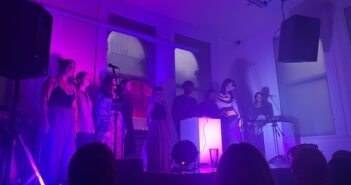
Warehouse party scene in Brisbane in the eighties/ squatting old buildings and whole sites. Improvising everything. People bowing in homage to the screens. The RAT parties in Syd in the late eighties. RAT NY88 – the first time we did nine projectors surrounding the Hordern when E was first hitting the scene in a big way. One party in the Hordern particularly when the whole floor went into spontaneous group dance moves. The time we put 2 starvision (massive outdoor CRT arrays) screens in the RHI (Royal Hall of Industries) which was also the first time a lighting director ever asked me to turn the screen down instead of vice versa.

Performances that went really well?
RAT late eighties – big shows, big budgets, big ideas, big crowds, big fun. Vision 4/5 performance in the Horden. The Big Day Out early 90s. The Humid album launch at the Metro in ’95. Some of the outrageous fun we've had doing the DIVA awards where the video design is worked into the whole structure of the show including stage design the presenters / mutiple venues. The year the whole Hordern cried when Carlotta went into the hall of fame – superb spontaneous video mix. Some of the Mardi Gras and Pride shows where we designed live shows integrating performers and video in complex ways.

What you don't miss about the 'early days' ?
Rigging.

How have your creative processes evolved since then?
Gotten more focussed – prefer shows.

Old gear vs new gear comparisons?
Gear – I love it all – the smell and feel of old analogue hardware, its hands on interface even though I hated it at the time and always wanted better control that went beyond the evolutionary hangover. Digital software based tools for their compactness, flexibility and precision – but I still want better interfaces/pseudo randomness.

The evolution of 'visuals' over the 90s?
Lo-fi and analogue always demanded more inventiveness and ingenuity over just firing up a bit of software. In the seventies and eighties it was film / slides / oil shows / monitor based video, then eventually video projectors. This made for a much more varied and inventive approach. I particulary loved the Video Subvertigo rig circa early nineties. As visuals have become increasingly ubiquitous thanks to cheaper/easier means of production and presentation they seem to have diminished in value and cultural context. The cult of the DJ continues to overwhelm all other creative pursuits, musically, visually and performatively (all the things I love and cherish).


JASON GEE
Aside from a long-time history of live video experiments in Syd, Jason Gee is also renowned for performing crunchy audio with Garry Bradbury as 'Size'.

Early Inspirations?
The television cutup work of Ian Andrews and John Jacobs, everything by Severed Heads and the radio show 'Stalking the nightmare' on 2MBS. Severed Heads live.

What equipment did you start off using?
Amiga 1000

Favourite moments?
The Australian Video Festival (1989) opening party where I had 30 identical TVs linked with RF cables all in a row and the signal got weaker as it got to the last.

Performances that went really well?
Big Day Out (1995?) where we had massive programmable cube video wall and John Jacobs had organised 5 layers of down stream keying.

Landmark events where live video went 'next level' ?
Big Day Out have consistently supplied the best screen technology.

What you don't miss about the 'early days' ?
Calibrating the grid on old video projectors, animating using frame by frame methods and storing the results on floppy disks.

How have your creative processes evolved since then?
My work now attempts to bring a more narrative context to the environment. The Psychedelic experience approach to visuals should be taken out and shot.

Old gear vs new gear comparisons?
You would have to say new, although I have a huge respect for where things have evolved from.

The evolution of 'visuals' over the 90s?
Isn't it all a cliché when you put it in context to its environment?
The scenes I was involved with or had respect for had a real DIY approach. There was a lot more sharing of resources and time.


KIRSTEN BRADLEY
Kirsten started out egularly performing solo in Sydney, creating lush live video for The Bird, Prop and other artists, before merging with Tonescope in Melbourne and producing several well received outdoor performances. She has also done some large scale video in theatre productions along the way. www.cicada.tv

Early Inspirations?
Fuzzy Logic crew in Sydney, Xmix on miscellaneous televisions and experiencing the Tokyo Equinox parties. Getting a 7300/200 Mac with video in-built! yeehar!

What equipment did you start off using?
I lied my way into the craft – got myself a national tour with The Bird, then went and immediately hocked my entire music studio and swapped it for a VJ rig – MX50, 4 tapedecks, a projector, 5 monitors and kilometers of cabling, all housed in old suitcases with foam stuck inside. I then went on tour and learnt how to use it all – rigging 3 projector shows as I went. I had a leatherman though, so I was sorted.

Favourite moments?
Making video with my sweetheart and being allowed to talk about visuals in bed at 3am. First night of VJing at a bush party with Tesseract, Morph and Oishii – they got me tripping and then stuck me on all this gear I'd never seen nor used, it all made sense for some reason. Re_Squared, cause we finally got to do a site-specific work with a decent budget. Birdcage, cause it rocked my heart and soul and everyone came together to cover a building in light and it was just damn special.

Landmark events where live video went 'next level' ?
When I figured out how to use my mixer at the first Bird Show in Newcastle (thanks to mr Nick Ritar who had shown up to have a look).

What you don't miss about the 'early days' ?
The size of the rig and the packdown time.

How have your creative processes evolved since then?
I know what I like, and I know how to make it.

Old gear vs new gear comparisons?
Old was tactile, new is powerful – it’s a tradeoff.


WADE MARYNOWSKY/SPANKY/AC/3P
Convict-era Australia's best known Booty House producer, and long-time 8-bit AV pin-up boy, Wade's been simultaneously testing bass bins and projectors for many a year. Recent projects include soundtracking a performance artist submerged in a glass tank of live eels and performing an AV mash-up onboard a Finnish ferry. www.imperialslacks.com/wade

Early Inspirations?
auv-i, tddy, 242.pilots, Farmers Manual, Pimmon, Francisco Lopez, Yasaona Tone, Dada, surrealism, Clan Analogue, post arrivalists, Toy Death, EBN, negativeland, Bloody Fist, Elefant Traks, Video Subvertigo, early Kinselas.

What equipment did you start off using?
Apple 575, 33mhz, 36mb of ram, 8 bits of power!

Favourite moments?
My first gig at Memory Loss at the Landsdowne, a woman danced wildly to an ambient set, Perth – having trapeze artists in front of my visuals was pretty weird, video stealth ninja was the best when we took over a Starbucks wall for around 40mins

What you don't miss about the 'early days' ?
Carrying around a desktop machine that usually crashed during my sets.

How have your creative processes evolved since then?
Into real time live inputs and increased automation. I’ve explored many different techniques.


ENDA MURRAY/THE HEADCLEANER
With the thickest Gaelic accent on the Australian VJ circuit by a long mile, Enda has continued on from his VJing to produce many provocative award winning media projects, always tackling social justice and environmental issues on the way. www.virusmedia.com.au

Early Inspirations?
Dabbling with Super8 film loops at small reggae sound system gigs in Coventry when helping out a mate who'd ‘liberated’ a video wall (20 x Barco 36 inch video monitors from his workplace). He was doing a lot of the commercial raves in dodgy venues from London to Liverpool but was very lazy in his approach to content eg having lugged and set up the monitors he then played Disney’s Fantasia and carried on getting stoned. I felt it was a wasted opportunity and began to collect material from BBC wildlife films and an eclectic collection of avant garde film sources to play at parties. I pirated some early computer graphic work from the Museum of Contemporary Art in London and hey presto, I was on the road. Matt Black from Coldcut was also an early influence. I rang him up after seeing one of his ‘rave tapes’ and he was very encouraging. It was nice the way people worked together in what is often a bitchy industry. Moved to Australia in 1996 and through Undercurrents contacts I hooked up with the CATV (Community Activist Techknowledgy) people in the Wilson St warehouse in Newtown and was very impressed with John Jacobs’ passion for VJing and his energy helping people starting out. Ian Andrews was another compatriot in those CATV days, and Video Subvertigo were taking VJjing to a respected place which was only fitting given the amount of energy that went into it.

What equipment did you start off using?
2 VHS players and an MX10 mixer… I never really moved over to computer. Prior to buying my first LCD projector I was in the habit of liberating a monster 3 gun CRT (Cathode Ray Tube) projector from the city council where I worked and setting it up in fields outdoors (I’m sure the technicians who guarded it during the week would have had heart attacks had they known). I was always more into narrative than spectacle and was always trying to create sense from the snippets of material I had. Using juxtaposition and effects to heighten the impact. I would always have a tape ready in the video machine at home in case something worth recording came on. It was very DIY.

Favourite moments? Where the visuals worked amazingly in the
venue/setting/environment? Where something weird/kooky/hilarious went down with the video/event/people? etc )
In more recent times I’ve concentrated on producing images rather than projecting but I do feel rather proud of my role in the ‘Boat People’ projection onto the Sydney Opera House. It was definitely a moment when projections were taken to the ‘next level’.

What you don't miss about the 'early days' ?
Lugging 20 flight cased monitors around was a bugger. On one occasion we had set up the video wall at a cheesy rave only to be told by the promoter that it was 6 inches off centre and we should take it all down and move it six inches. These parties were dodgy as fuck and on one occasion we went to Quadrant Park in Liverpool only to be surrounded on arrival by a swarm of 10 year old urchins scamming cigarettes, spare change and, it seemed the entire contents of our van.


TESSERACT
Cindi Drennan
Tesseract (Research Laboratories) are amongst Sydney's most prolific ‘creators of immersive visual environments' in recent times, and the ever enthusiastic Cindi half of the duo continues to move them away from 'screen rectangles' and into screen sculptures, installations and performances at odd shaped buildings like the Opera House. www.tesseractvisuals.com

Justin Maynard
Key developer of the Tesseract Research Laboratories shoe phone and interactive installations, Justin is also a qualified rigger, a coder, and co-organiser of many ludicrously complicated audiovisual events. www.tesseractvisuals.com

Early Inspirations?
Cindi - my background was in painting and filmmaking; live video performance was a progression, using events, architecture and screen sculptures as a canvas for ideas @ 25 fps. We were influenced by prolific and experienced VJs like John Jacobs, Emile Rasheed from Area NotArena, who were tremendously encouraging and this provided inspiration for directions to explore, or avoid.
Justin : I was attending an Apple world wide developer’s conference in San Jose in 1996 where the Apple Game Sprockets group had a party in a warehouse. An electronic band noodled on stage, but the entire back wall was covered in beautiful movement and colour, which I tracked down to Greg Jalbert who was performing with his own software bliss paint (www.imaja.com). That was the moment I realised I wanted to get into live video.

What equipment did you start off using?
Whatever we could access, we were hungry to try everything – initially Justin used a 7500 Mac running Blisspaint, Cindi created sequences using traditional animation techniques, combined these with footage we shot and manipulated ourselves. We recorded every single show we did, watching back to learn from our work (we've recorded hundreds of hours, it’s fascinating to watch the progression). Our 2nd mixer was a modified Panasonic MX-10, adopting the mod devised by Ian Andrews and John Jacobs (Video Subvertigo). The immediacy of response and the control of image using knobs became integral to our show, and we eventually colluded with our electronic engineer friend, Brian Murray, to modify an MX-12 for higher quality, which is what we still use at many performances.

Favourite moments?
Freaky Loops 98, 99 were the biggest events we had ever played at in those early days, and were exciting events that brought together all sorts of musicians in a fundraiser for 2ser. The ‘heart was in the right place’ and it was an unforgettable place of funk, fun, humour. FL99 we chose a theme ‘triangles’ and had triangles sent to us by people from around the world, even our friends contributed. Early Liquid Labyrinth parties were special. Perhaps the most special was ‘Life the Universe and Everything’ at Moss Vale, NYE 2000, where we played a bogus CNN report at midnight... almost tricked a few people into heading back to Sydney for those ‘Y2K buggy ATMs spitting cash out onto the streets’.

Landmark events where live video went 'next level' ?
Electrofringe, for bringing together VJs from around Australia (www.projectroom.com/ef2k ). It generated many positive connections, ideas and projects. It led to the formation of the vidi-yo nexus, which helped us all keep in touch (www.vidi-yo.com) At Electrofringe in 2000 we all performed for each other, with each other, all together in a group show, eventually attempting silly things, even projecting some VJ’s arse onto the white scaffolding on the renovations to the council building. There were great experiments like the mega-video mixing machine on the last evening, which ended up inspiring our Video Combustion project, which is a live ensemble performance by an ‘optical orchestra’ (www.videocombustion.org)

What you don't miss about the 'early days' ?
Being labelled ‘trance VJs; and having to work really hard to get people to recognise we weren't. Oh, actually that hasn't changed!!! You get pigeonholed easily in Sydney – even people who've known us for years don't realise the huge diversity of work we do from shows at the Opera House, to theatrical works we've invented ourselves, and an amazing array of installational and performative works & styles in between.
What we do miss about the early days was the amazing projectroom warehouse space in Surry Hills where various electronica aficionados lived and worked, it was a bit of a collective VJ gathering / play space. Sadly it was a victim of Sydney inner city unreal estate, we lost that essential "shared space" where VJs would hang out, and others from interstate or overseas would stay. Without that everyone sort of dispersed, lost touch. www.projectroom.com/warehouse/ www.projectroom.com/warehouse/highrise.htm

How have your creative processes evolved since then?
From the beginning we've been committed to live (audio) visual performance as an important new screen-based artform (and culture), and using that as a basis we continue to explore and evolve the concept of illuminative art, live improvisation, screen sculpture and audiovisual architecture... all of which require loads of think time, planning, prep aside from the actual live performance itself. The creative investment means this is a full time occupation, and we tend to do fewer, larger projects. We partner with collaborators, and initiate more of our own projects these days.

Old gear vs new gear comparisons?
Gear Schmear. The ultimate tool is the mind… of the viewer – muahahhahaha! Seriously though, despite the laptop evolution and all the small stuff, we still lug loads of equipment to shows because the quality we strive for is only possible with the bigger processers/faster drives etc of the desktop computer. Digital Video and DVD are integral new additions, no lugging crates of VHS these days. ‘Lug, Lug me do, You know I lug you!!!’ is our favourite lug song. www.yaksecrets.com/lug
Justin: I think that modern laptop loop based techniques really lose something from the old mixing up hours and hours and hours of VHS. Laptop based visuals seem to miss out on the visual surprises and serendipity of VHS.

The evolution of 'visuals' over the 90s?
Tesseract: Equipment/Software has its own inherent aesthetic; the modified MX-10 and MX-12 video mixers, and the Fairlight CVI have their own unique signature effects; posterization, primary colours, strobe effects and beat mixing. For a while my favourite was preset 41 on the CVI – it was a shatter zoom that I would freeze on a beat, creating image trails and ghosting effects. Version 1 of Arkaos Xpose on the Mac did a really nasty fast cutting hard-on-the-eye thing if you triggered two clips simultaneously via midi, but at a frame rate of 6 fps it worked like a strobe and we used it at bangin' techno events like Swarm.
The imagery we would associate with the VJs of the mid ‘90s would be high primary colour, chroma and luminosity keying, multi-coloured video feedback, image layering (layer 'pon layer 'pon layer!!!), and video cut-up. Also really early chunky 3D graphics and wireframes. And of course.... fractals! There was a certain Sydney aesthetic of political and social imagery, visual activism, which was totally different to the Melbourne fluffy candy-raver styles.

Live Video Notables ( Not Interviewed )
Stephen Jones - Severed Heads was invited to jam in the Metro TV studio (Sydney) with Stephen Jones and his self-assembled video synthesisers and pattern generators. Stephen became the live vidician for the globetrotters-to-be. Severed eventually became a solo pursuit for Tom, but together with Stephen they amassed a considerable body of AV work, much of of it profiled at the very inclusive www.sevcom.com. Some of Stephen's considerable history of technical and aesthetic video experimentation can be viewed here: www.culture.com.au/brain_proj.

Steve Middleton - A legend in the Melb pixel scene, Steve created massive globally toured visual installations in the 'Don't Shoot The Messenger' in the early 90s, produced the first net telecast from Australia in 95, worked with Stelarc on robotics and is now researching a Doctorate in artificial intelligence at the Royal Melbourne Institute of Technology. http://home.vicnet.net.au/~stevem

Adam 'Mu Magic' : Charismatic Brisbane VJ & visual producer, who unfortunately passed away earlier in 2004.

Lalila: Sydney duo with sophisticated home-coded audiovisual linux shenanigans and av flair.

Morph: Syd Fairlight, live pixel & VJ Forum enthusiast.

Olaf Meyer: Has built his own laser harp, turned a crystal Ball into a visual theremin and performed many, many melb_gigs: http://olaffalo.i.am/

Chris Lange / Oishii: Melb creator of the VJ software, SVi : www.oishii.org.

Richard // Superlight : is best known for his cinematic, textural & vectoral contributions to the Frigid event.

Kim Bounds - One half of 2 Loops & long-time Melb pixel-ist now running community digital media projects @ ACMI.

Dale Nason - Long-time contributor to the Melb Centrifugal feedback massive, and photocopier of dead cats.


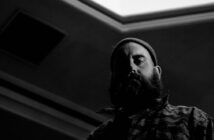
video_1982-video_portrait.jpg
 
video_1984-tim_vid.jpg
 
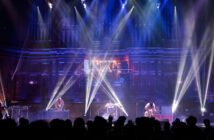
video_91-rat-01.jpg
 
video_95-mardigras-01.jpg
 
video_cicada.jpg
 
video_fairlight.jpg
 
video_fairlight2.jpg
 
video_tesseract.jpg
 
video_tesseract2.jpg
 
video_tomellard.jpg
 
video_Wade_tasi.jpg