

Email this article to a friend
DJ/Rupture
Interview by Sebastian Chan
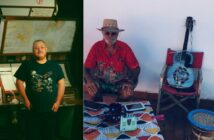
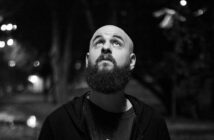
Jace Clayton, aka DJ/Rupture first came to international prominence with a DJ mix posted on the internet and distributed as a promo CD back in 2000. Titled Gold Teeth Thief it was a genre-bending mix of tempos, styles and time signatures cutting ruthlessly across geographic and stylistic borders mashing Morocco with New York, Kingston with Beirut with a healthy dose of breakcore, jungle and noise aesthetics. Coming at a time when Timbaland and many Jamaican riddim producers were starting their Orientalist fixations with the Eastern motifs, tablas, sitars, Rupture’s mix brought a new perspective upsetting these Orientalist fantasies – a “strike against geography” as he put it. Following this came the Minesweeper Suite mix and several 7s and 12s for his own Soot label as well as for Broklyn Beats, Tigerbeat6, and Tigerbeat’s industrial dancehall sub-label Shockout.
Rupture started out in Boston where he grew up and went to college. “I had a radio show for a few years on a great community station - the late night shift, of course, but I had total freedom. Back then it was mostly just making transitions, talking about the music, bringing in local electronic musicians and DJs for live sets - but I myself wasn’t a DJ. Hearing jungle for the first time at a rare after-hours club in Boston blew my mind. I wanted more. So after a few months of going out and dancing, I decided to become a 'proper' DJ. At around the same time I was meeting and developing a community of like-minded DJs, visuals artists, listeners, and musicians. We were all frustrated by Boston's lack of spaces to meet and enjoy experimental electronics and also frustrated by the very close-minded hip hop and dance music scenes. Inspired by [this frustration], and by rumours of these cool Soundlab parties in New York (although none of us had attended any), we decided to start a collective dedicated to ‘experimental audio and visual adventures’, staging events roughly every month in a different location each time. From modest beginnings it really took off and grew. We spent tons of time on it, transforming each venue space through extensive installations, video, unusual sound configurations, inflatable rooms - it was a fun and dynamic time”.
“At some point we heard [fellow Bostonian] Hrvatski's first Attention: Cats EP and as soon as we did, somebody invited him to come play at our next party. A typically atypical event was called Junk - Jungle vs. Punk. Half-hour sets alternating jungle/experimental DJs with local punk bands, free rice and beans, an all-ages daytime show in a church-turned-community centre. This type of sound-and-social clash was exactly what we were after, and it really made waves in Boston . . . When I had the radio show I would change my name every season, but soon after Toneburst (that was our crew name) got going, I finally settled on DJ /rupture, so that’s where I was born . . . [Toneburst] was truly important, not only because it was this really generous and hopeful example of collective non-hierarchical action making a difference in the community, but also because we created a safe-space where everyone was totally free to develop their artistic vision, free to develop it and encouraged to explore and take it in new directions, talk about ideas, test stuff out, no strangulatory rules. Nobody would book us at ‘straight’ jungle clubs or anywhere else, but we didn’t care!
“I spent the summer of ‘96 in NYC and went to all the weird lo-fi events, Soundlab and ‘illbient’ parties I could. It was a fantastic time - DJ Olive, Badawi, Toshio Kajiwara, DJ Firehorse, Cruz Missle, Mutamassik, Wally - all these dope experimental heads developing their sounds in a primarily supportive environment.” As the NYC scene faded from the media glare focussed intently around DJ Spooky in those early years, Rupture relocated to Barcelona.
Now he is just back from a manic touring schedule. Its been a busy year. Still residing in Barcelona, he has been collaborating with local musicians as part of his Nettle project, as well as continuing to expand his DJ work.
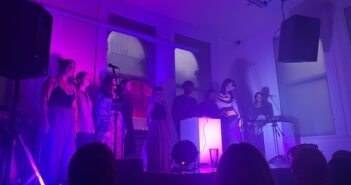
“Some tour organisers first approached me last year with the idea of doing a tour that combined Arabic music with hip hop traditions. They wanted me, Nettle playing live, the French-Lebanese hip hopper Clotaire K, and a Middle East group I mixed on Minesweeper Suite - the Pearl Divers of Bahrain. Impressively, they had arts funding and were able to commission the formation of Nettle as a live project. It was something I’d wanted to put together for awhile, but I lacked the time & money to get it up and running until this tour. Nettle came together as a 3-piece. Abdel plays violin but then switches to oud [a string instrument a little like a mandolin] for a number of tracks. Filastine’s main drums are 2 darboukas, but he also incorporates tarija, bendir, metal castanets, and some MIDI triggers around various songs, and I do beats, tweaking, dubbing - no vocals. Unfortunately The Pearl Divers fell through, and so they kept asking me for suggestions. Going out on limb, I told them about my favourite Moroccan group Nass El Ghiwane, their history, their context, and the fact that they still do tours occasionally. I’d also suggested a lot of other groups, and so I was overjoyed when this June they told me that Nass El Ghiwane had confirmed”. As Jace explains on his website, Nass El Ghiwane are a legendary Afro-Moroccan rock band who have been around since the early 70s. To the surprise of many reviewers who assume they have a ‘message’, their politics aren’t upfront, and instead “a large part of it has to do with precisely their sound, their choice of instruments, why they sing things one way and not another, and how that relates to Morocco’s massive polyglot musical heritage and the long shadows cast by Egyptian music”. Founding member Omar Sayyed explains “I don’t think the average listener thought of us as a political group. The problem that we had was with the intellectuals and the critics; they’re the ones who wanted us to talk about the deeper meanings of our songs. It’s been like this for the past thirty years”.
Despite this live tour as Nettle, most of Rupture’s recent tours have been of the a more ‘traditional’ DJ nature. “I’ve just spent the past three weeks touring Europe with Japanese breakcore artist Ove-Naxx, doing full-on DJ /rupture triple turntable sets. Earlier this year I was back in Dubai [which is captured on the Bidouin Sessions mix on the Violent Turd label]. Dubai is unusual because its so wealthy, its a funny scene. There’s no subculture or ‘underground’ to speak of, and no traditional acoustic players either. Thirty years ago it was primarily sun-blasted desert. now it’s SUVs with tinted windows and international financiers. My set went over well, and people definitely appreciated the type of mixing I’m trying to do. But what most kids there listen and dance to is determined more by their economic status (crazy rich) as opposed to cultural heritage or geographic location - house, mainstream hip hop, R&B. At the same time, it’s a welcome change to drop Arabic tunes & vocals in a place where it’s part of the musical landscape & folks understand the lyrics and so forth”.
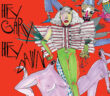
In the November his debut solo album was released on Tigerbeat6. Special Gunpowder is a crazy record. The record skids from style to style, genre to genre. “Something I was conscious of, was that I was getting pigeonholed for my DJ-mixes, so I wanted to represent something completely different - all original tracks and productions. I don’t like to repeat myself or simply do the thing that an audience or market segment would expect, or be most comfortable with. I like curveballs . . . [The album] really grew organically over the course of about two years. Each song is its own world really, and I wanted it to be a chorus of voices. My only real guiding goals were to make an album that I could really listen to from start to finish. Personally I think very few albums these days work from beginning to end - because of my DJ nature, and more generally because of the rise of MP3 culture. ‘The Album’ is less and less how people experience music, but that also means that when you find a CD you can put on and just enjoy, its a real pleasure. So I was after that sort of a record, and I wasn’t afraid for certain songs to be quite different from each other as long as they all made sense as a whole. I got excited by the idea of producing an album that was broad but filled with lots of intimate textures and moments, rather than just cranking out different versions of the same basic song structure and genre like most artist albums . . . Some tracks evolved over the course of several months of sending tapes back-and-forth with a vocalist, and some like the closer, Mole In The Ground happened rather spontaneously in a few days. I’m really slow at producing but I knew I wanted to hit certain emotional or dynamic points. I wanted to work with a bunch of differently talented musicians, so I just started approaching people whose work I really liked, and tried to let things just flow from there”.
In the end Rupture managed to track down quite an amazing array of guest vocalists for Special Gunpowder. Amongst the guests is none other than seminal Jamaican singer Sister Nancy best known for her Bam Bam hit of 1979. “Nancy is a firecracker! The long story made short is that some Rasta friends of mine in New York City were talking about her, and I mentioned how much I liked her work, then they told me that they knew her. So I was like, ‘well, hook me up’. Of course they were operating on Jamaican time, so about nine months and a bunch of emails and phone calls later, one of my boys finally got me her phone number. I just called up out of the blue and that’s how it began. In the beginning I sent her all these crazy beats and she was straight-up about what she liked and what she didn’t. Over the process of that track we became friends, and she was even coming to me for legal advice about Bam Bam’s rampant bootlegging”.
“Sindhu [on Mole In The Ground] is another interesting story. A Norwegian friend of mine knew how much I love banjos and so one day she sends me an email saying – there’s this amazing friend of mine who plays the banjo who’ll be in Barcelona for a few days. And so I met Sindhu. We spent one day talking about music and Boston (turns out we used to live near each other) and then spent two days in my studio recording Mole In The Ground. It was one of the last songs, a totally surprise occurrence. The day after we finished recording it, she went back to the States”.
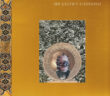
“I hadn’t ever read Elizabeth Alexander’s poetry [on the opening track Watermelon City] until I was assigned to review [her collection] by the Washington Post a few years back. I was totally impressed. A year or so later I mentioned to a mutual friend that I’d like to compose some music for Elizabeth, and without my knowing it, my friend told Elizabeth, and so she got in contact with me directly. I recorded her reading several of her poems about a year before I built the music around them. Elizabeth is great because she’s a ‘proper’ poet, not an MC, slam or performance poet, yet her delivery is incredibly powerful”. Watermelon City is the track that inspires the album’s sleeve art.
With so many guests ‘touring’ the album is a difficult proposition. “I’m still looking into ways to transform the tunes on the new album into something more live, but at the end of the day, it is still much more interesting for me and the audience to do an intense DJ set, so that’s what its been so far. Any presentation of the album would squeeze out a bit of the album’s diversity and I’m really into this idea of lots of voices, so just one MC or vocalist wouldn’t quite carry it live”.
Unlike a lot of his DJ sets, Special Gunpowder doesn’t include much in the way of breakcore. Whilst there are the tracks with Sister Nancy and Wayne Lonesome, the brutalist mashing of white noise breakbeats with ragga quite common in Rupture’s DJ sets is missing from the record – no doubt to the annoyance of breakcore enthusiasts. Rupture has a antipathetic relationship with the breakcore scene at the moment – and the continuing revival of ragga sampling leaves him nonplussed. “A lot of breakcore artists are infatuated with dancehall in a really suspect and shallow way - making their ‘hardcore’ tracks sound more aggressive by using acapellas of deep macho black Jamaican voices - relying on and reinforcing tired old stereotypes of the virile violent black man. I really don’t like that . . . There was virtually zero crossover with the first wave of jungle, and there’s certainly no breakcore bootlegs making their way to Jamaican ears now. I was talking to [seminal jungle producer] Remarc about the sudden strange popularity of ragga jungle rewinds and jungle-breakcore and he was just bemused by it all. He said something to the effect of ‘we were doing amen-cut-up breaks 10 years ago, so I don’t really understand why kids are still so excited about it’. But for him, it means more gigs and a new found fanbase in places like Midwestern US and Japan. Remarc told me that one of the main reasons UK jungle slowly stopped using reggae elements was that a lot of Jamaicans in the UK started complaining about how they were being ripped off and weren’t getting the cash as jungle skyrocketed in popularity so it just got easier to leave the reggae samples behind. . . . [thus] the reason I work with labels like Shockout is that they actually deal with and pay the vocalists. That’s really important . . . Dancehall is a very exciting music right now - there’s a lot of very original, very strange productions coming out of Jamaica. It’s an exuberant, chaotic, bass-heavy culture, and in the quest for hit singles, the producers make some stunning, surprising music. That’s why I like it, I really like all reggae, and to me one of the best things about reggae is the speed with which it evolves. It is quite easy to draw a narrative line connecting the conscious melodic roots reggae of the 70s up through to the weird atonal gangster synthetics of current ragga. The culture of versioning makes it wonderful for DJs too - if you find a riddim you like, then you get to select the vocalists who are giving the most interesting performance on that riddim to play out live . . . such deep variety”.
“This year I’ve gotten pretty deep into East London grime. Not the wishy-washy Rephlex [label] dubstep and Forward [club] stuff that calls itself ‘grime’ as a marketing term, but the grimey weirdo electronics being made predominantly by black East Londoners, strange spacious Playstation music with raw MC’ing over the top and some of the most gorgeous and alien and relentless bass architecture I’ve ever heard. Mostly I just listen to cassette tapes of London pirate radio - it’s like the UK’s first indigenous hip hop, and when it is hot it is truly mind-melting. The style is still adamantly young and unrefined - the hottest grime you can’t purchase (yet) - it comes out over live jams on the radio, with guarded dubplates and exclusives being activated by MCs going bananas on top. The Silverdollarcircle blog pointed out the funny paradox of these inner city grime kids who won’t release their vocals on vinyl because they’re waiting to be signed to a huge label –it’s either free pirate radio performances or six-figure signing deals, so unrealistic you can’t help but be impressed!”
“The other hottest music area this year was crunk – [the name for a variant of] southern US hip hop like Lil Jon. I’ve been into the synth-driven ‘Dirty South’ hip hop for years and years, but in 2004 it hit the mainstream big time and the productions are as hot as ever – totally electronic [and synthetic], with not a ‘nostalgic DJ Premier-type sample of an acoustic instrument’ in earshot, just lots of goofy thug lyrics, gorgeous sung choruses and refrains, syrupy bass. [The rapid global spread of crunk is] fascinating - I was driving in Belgium and they were playing this filthy filthy track from Lil Jon’s Crunk Juice - but it was totally uncensored unlike hearing it in the US on the radio. The big labels see it as major pop with major revenues so they go about marketing it worldwide while, perhaps lots of [cool indie/undeground middle class] kids still feel it is too Black or too ‘foreign’ or too whatever and can only relate to it via the crutch of irony . . . Pop music has always been about fantasy. This [underground/ironic problem] infects a lot of music criticism too - I’m so tired of critics who fetishise ‘street’ music like crunk and grime and invent this dichotomy between the ‘naïve’ native genius (this is ‘real’, its the ‘voice of the ghetto’) and more 'intellectual', less populist, less "real" music. It’s laughable, using their own dull prejudices to divide, categorize, and cut up a world of sound!”
Whereas once music was filtered by music magazines, radio shows, older siblings and the like, music now is a pretty much open field with MP3s and file sharing. Checking out new micro-genres like crunk and grime is just a click away. But with this opening of access has come a devaluing of music – everything is reduced to interchangeable data. In Sydney at least, this culture has started to affect community (and commercial) radio – as listeners buy iPods and portable music players, they switch off preferring their own playlists – music consumption becomes individualised. Rupture concurs; “MP3 consumption really does favour soundbite style indulgence, and MP3s in general circulate without a lot of the very context that helps music have meaning - artwork, liner notes, the record shop, concert or friend’s house you had to go to to get it, all of that stuff . . . I learned so much about music by listening to Boston’s college stations when I was a kid - they wouldn’t just play a song, the hosts would often have a lot to say, explaining this or that, or just putting certain music alongside similar stuff. The radio DJs had great collections and wanted to share . . . I wish there was some [similar radio scene] in Barcelona . . . its very sad. But yeah, I still do frequent mixes for radio, special radio shows, that sort of thing. I’m always down to keep the airwaves interesting. My mixtapes have a similar function-- of presenting people with a lot of the sonic dirt and disarray that they might otherwise not have in their listening. There are real-world, specific things one can do to keep public radio alive in their communities, just ask around. Unfortunately, it's too late in Barcelona. I'm actually thinking of pitching a radio play somewhere, I've been really inspired by Gregory Whitehead's work and Chris Morris (Blue Jam, Brasseye)”.
“People don’t often talk about radio as public space, but that’s what it is, and nowadays, like so many other forms of public space, it is being increasingly patrolled and privatised. At the same time the listeners are themselves happily withdrawing into the iPod’s offer of sonic seclusion - moving out to the audio suburbs if you will, apart from the dirt and disarray and unwanted interactions of public space. It sucks! . . . not only do MP3s crack music out of its necessary cultural exoskeleton, they promote fast-food style eating - people like whatever sounds good ‘on first listen’. I remember when I was a kid, I’d save up to by a cassette and would listen to it over and over again for weeks, trying to understand it and approach the music on its own terms. I had enough time to really focus and see what the music was trying to do . . . Much music (except pop) isn’t designed to hit you on first listen, a lot of styles require time and attention and repeat listens before they reveal their gems. In the post-MP3 landscape with its intolerant attention spans, you just click on the next tune in WinAmp or iTunes or whatever, or go searching for another tune that fits better in the default consumer mode of instant gratification . . . I like a lot of difficult music like musique concrete, noise and more ambient drone-y music like Dead C and Main but if I was first presented with those sounds as MP3s, I probably wouldn’t have been able to give them the necessary attention. I mean, is popular music nowadays just music that is good to write emails to?”
DJ/Rupture’s debut album Special Gunpowder is out on Tigerbeat6. His Nettle project is available on theAgriculture. |