Issue #013 (March 2006)
Cover designer - James Hancock
Email this article to a friend

Cover designer - James Hancock
Interview by Bim Ricketson

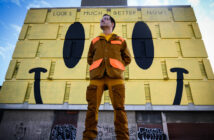
You may have seen James Hancock around and not realised who he was. It’s quite possible that it was him ruffling through the skip bin in your street last night. Or the one admiring a crusty piece of paper fished from the gutter. Or while you were skimming second hand records at a flea market he could have been next to you, haggling for an antique book on magic tricks.

Hancock’s art and design – to him they’re inseparable – is built from the layering and recontextualising of everyday objects that the rest of us would either ignore or appreciate but not collect and obsess over. His work is a distinctive collage of fabrics, printing, drawing, painting and found objects. And while he is as at home on his laptop as he is with canvas, all his work maintains a tactile and homespun feel.

Hancock graduated from a degree in Visual Communications six years ago. Soon after he moved into an old bank building in the Sydney’s inner-city suburb of Redfern with two friends and together they began the artist-run initiative Space3. He has been involved in a wide range of projects across a number of media – from website design, VJing, album designs, animation, photography and graphic identity, through to his mixed media artworks. The creative and personal relationships formed through the gallery in which he lived has led to a wide network of creative types to collaborate with. As well as just finishing compiling a compendium of Space3 shows into a hardback, he’s co-running the Indonesia/Australia art festival gang.

He’s a busy guy. But you can be sure he’s not racing between meetings – he’s wandering, looking over fences and picking up junk; it’s where his all inspiration comes from. ‘Everything and anything takes interest,’ he begins ‘It can all be used at some stage. Though I'll also just collect things in my head if I've got a job on. Or if I'm doing a series of works, you can walk around and find colours or shapes or other inspirations in the most random things - the edge of a chair, the lick of paint on the gutter, the shadow on the wall. I don't know, there are so many things to look at. I love getting obsessed about some little piece of crap. One old pencil, a piece of wood, I have a small wooden ball I quite like at the moment. Power tools, pencils, mouse, scissors, speakers, cogs, paint, wood, print. I had this magic trick book from the ‘20s with beautiful illustrations that looked so weird de-contextualised: guys blowing smoke into their sleeves, or shaking hands in really suss ways.

‘Collage and cut out has always been important to me as a way of exploring relationships and of building narratives between images and objects. One thing next to another thing can be really amazing. Photos side by side, old bits of paper, plants, it all can be built like blocks into poetic little moments.’ Some objects are easier than others to collect, but there’s always a way to make them your own in some way. ‘It sucks sometimes when you see something you really want to take home, something you really want to pick up, but it's too big, or it's on someone's house or it's totally festy in the gutter on a rainy day (though I have picked up dodgy wet pieces of paper in the street to cut up later). Sometimes I've gotten around this; I remember there was this billboard on Parramatta Road that I really liked, it was made up of all this old sheet iron and I would have loved to have had it but it was about 30m x 15m and on someone's shop, so I just started telling people it was mine. Whenever I drove past with someone I'd say that the billboard was mine, so I'd sort of picked it up and collected it. I just didn't have it at home in my pile of stuff to be cut up later on.’

Artists like the Dada reject Kurt Schwitters and hallucinatory painter Francis Bacon are an inspiration as much for their process as their works. ‘I really love chaotic artists’ mess, their studios, a total involvement in process,’ he says. ‘I love the idea of letting your creativity totally take over your surroundings. ‘I love how Kurt Schwitters went crazy on his house: from a collage, he infected the walls, then building structures and sculptures until the whole house becomes the work, the philosophy surrounding a bit of personal madness. And I love the idea of artists like Francis Bacon standing in all this crap of layered images and collected junk and paint, living in it, sleeping in it. Then picking out bits of finished work. It’s the ultimate collage process, things actually falling onto each other, paint spilling accidentally but perfectly onto an image. Such great potential for serendipity.’

Living in your studio, which itself is inside a gallery is certainly one way of getting absorbed in the art-making process. And that’s how James lived in the Space3 gallery for two years. ‘Space3 started in 2000. It became very well known as a place for artists, musicians and creatives to have the opportunity to collaborate and exhibit their work in a very free environment. There have been some pretty massive shows. Futura, for example, packed the place out, purely through word of mouth, there was no promotion at all. He left a huge painted sticker on our fridge which someone reckons is worth a million bucks. I think we left it behind though, so its probably still in there rotting away!

‘The early NOWnow improvised jazz nights were really romantic. There wasn’t a scene for that at the time so they were really trying things out. I had certainly never experienced anything like it. Now there’s quite a scene for it and their festival keeps getting bigger, it’s great to see something grow like that. There have been some really intimate shows too; what made them all special was that it was always about showing the work and hanging out. The first show we did because we wanted to have a show of our work and be able to sit around with our friends and new people, have music, have it informal, but all work together.

‘After years of threats of re-development we finally got kicked out of the building after years of successful events and being a major part of the artist-run initiative scene in Sydney. But we were all getting a little frustrated with the reliance on a space - it is so draining to keep a space running, to teach each new artist or performer how to look after the space and inevitably cleaning up after them – so we now operate as a project group. We organise shows and other opportunities for the network of artists we built up over the years. Opportunities such as the visual catalogue we recently put together with the help of funding from the NSW Ministry for the Arts.

‘The book is there to promote both the history and future of Space3, to allow people to see what happened over the years. So much amazing stuff goes on in little galleries around the world that never gets seen, so with the funding we had we really wanted to document some of our events. I was the main producer, project manager and designer of the book. It was a really stressful project, having to hassle people so much to get the content together and try and get them to understand how amazing the end product was going to be. I lost a lot of sleep over the printing, the amount of money, whether it was going to work, and what all the artists involved in the space were going to think. Having such a massive project in your life for what was probably about one-and-a-half years is pretty intense. At some stages I felt like it all weighed really heavily on my shoulders, but the Space3 crew we’ve built up is so supportive and that helped so much. We’re basically starting off by self-distributing it through local and national bookstores, working up to international. If people want a copy they can go to our website: www.space3.org.’

With the close of the building James moved into a more regular living environment – a shared terrace house. This was short lived. ‘It drove me mad,’ he says, ‘There were students and professionals and we all lived separated lives.’ There was no daily creative interaction.

He moved next to an unusual shared studio space in nearby Darlington. ‘I’m living in an old Presbytery at the moment,’ he says ‘It’s interesting; the church we rent from is Melkite (Arabic-speaking Catholic), which means all their hymns are in Arabic, which is pretty beautiful to wake up to on Sundays. And it’s pretty nice smelling - the almond rice and shish kebab smells wafting up on religious holidays. It’s great knowing that we are living so close to such a different culture. We probably don’t really know what they’re doing and I don’t reckon they really know what we’re doing up here. It’s so interesting seeing each other’s culture pass by. It’s pretty funny too ,seeing trains of white HumVees rock up for a wedding, or super-cute tiny kids in tuxedos being hassled by big mommas is great. It’s all part of the juxtapositions.

‘The presbytery is a bit different to Space3 as it’s not so much a public space. Space3 was a gathering point for people; there were always people hanging around chatting. This really bred collaboration and interaction, discussion and growth, both personally and in our work. The presbytery takes this idea and integrates some of the comforts of home.

‘It's really important for me to have other creative people around doing other creative things. Different creative people, old “squat space” people, video artists and audio engineers and musicians. Since I work mostly from home, and spend lots of hours in the studio making things, it’s great to have other people coming and going, to be able to chat at random hours, to sit amongst their creativity, to have them show me things and to be able to run ideas past them that I’m working on. It’s really like a very, very, very free studio, with everyone working on their own projects. It’s great also that we sometimes call on each other to help us out with certain parts of our projects; I might get someone to help with some music, or they might need help with some graphic thing. It’s a really stimulating environment.

‘It’s great to be in an interesting physical space too, which enables us to do interesting things like having really big dinners. We just hosted the annual Imperial Slacks (an old artist-run initiative) Xmas cabaret, where a group of us sat around eating and drinking and performing for each other with readings of poetry written when we were four, nipple tassel dances, solo music performances, and aerobics classes. It’s really stimulating to be amongst piles of creativity, in music, in visual, in words – to sleep amongst it, but also having the space to be able to walk away from it all, sit outside, talk to someone in their creative space, outside of your head.’

On another level James has done the same thing with his extended travels overseas. ‘It seems every couple of years I get itchy feet,’ he admits. ‘So I've travelled quite a bit. Travelling frees me into new ways of seeing, and it is also is a great way to collect imagery. I usually travel overland, trying not to use planes. It's a romantic way to travel, more process driven, seeing countries change into each other over borders - cultural gradients. The biggest trip I did was overland from Sydney to London, via south east Asia, China, Russia, Scandinavia and Europe.

‘Some of the travelling I’ve done has been a total step away from art and design - complete time off, but I have also worked while I travelled, which has taught me to use whatever material I can find, being inventive with what I have. It means I am actively using and recycling things from my environment - this is important, this constant collection and re-interpretation of objects, from pieces of paper to little plastic cogs. I always have a box of source material to work from. A recent art project involved pulling apart a photocopier to source materials that I layered with drawings of these found objects (like a botanist draws their discoveries as they go, losing drawings along the way amongst rotting plants and animals).

Recently the Gang Festival project has required an extended stay in Indonesia, an opportunity he relished. ‘After travelling so much, I really wanted to do some work in another country, to really become part of the culture and not pass through as a tourist. A grant came up from the Australian Indonesian Institute, so we got a team together to apply to do an exchange festival, and we got the funding. We decided to do an exchange where a group of Australians from artist-run initiatives went over to Indonesian artist-run initiatives with a touring show , showcasing work from Sydney artist-run initiatives. Then we would bring back a number of Indonesian artists and a whole lot of Indonesian art work from artist-run initiatives and have shows, discussions and collaborations.

‘It was a really exciting trip, and it was amazing finding ourselves travelling through the night in bicycle taxis to shows we’d set up, stapling the room sheets together as we went. And trying to get things done, like photocopying, trying to explain double-sided in another language was pretty hard! The project has been really successful so far; as I write this the first few Indonesians are arriving to start the festival, taking place in January 2006 (more information at: www.gangfestival.com). From a Sydney perspective, it’s interesting to pull together all these artist-run initiatives – that usually work independently but all know each other through the network – for the festival. This solidifying of relationships has been a learning curve. For example, dealing with the relaxed and fluid nature of artist-run initiatives – having spaces close as we were organising the festival, moving dates and shows around at the last minute.

‘My role in the whole festival is mainly as designer, curator and residency artist. I went to Indonesia with work I curated here with fellow artist Alice McAuliffe. And we both curated shows from Indonesia. I also made some new work while travelling. I expected to find a lot of craft-based, naïve sort of work in Indonesia, but was really surprised to find a very strong contemporary art scene and language. There were great organisations doing amazing project works with the community and also really strong graphic work from individuals.

‘In some ways it was interesting to see how free they were allowed to be. In setting up some parts of the Gang Festival in Sydney we’ve had to consider sometimes pretty crazy public liability and health issues, which can be stifling sometimes. In Indonesia they just do stuff; if you want to set up a shop in your house, go for it; if you want to build a castle in the backyard of your mum’s place, no one is going to stop you. That freedom seems to generate great potential for projects and opportunities for artists to take part in the community on a daily basis.’

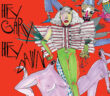
Although James finds no distinction between his art and design, he admits that some clients are better than others on commissioned design. And some of the best clients of all are musicians. ‘They are typically the best type of client because they come from a similar creative head space,’ he says. ‘So they are genuinely interested in what you are doing as an artist. It is much more of a collaboration, where you are each responding to each other’s work to make the whole thing work together. It’s also exciting to work with artists whose music you engage with. For example a big recent project was a whole visual package for Josh Pyke (www.joshpyke.com). I did all the illustration for Josh, and designed the CD artwork and merchandise. These illustrations were also integrated into the video clip for the single “Middle of the Hill”.

‘The final design involved illustrations of animals where you could see the interior of their bodies. It was a romantic sort of anatomy, where there were too many hearts, buildings infecting the lungs, and heaps of entrails (you’ll see these pipes have lingered onto this magazine cover!). I did these illustrations while on the artist in residence program in Indonesia. I brought ideas and illustration techniques from that artistic experience over into Josh’s final designs.

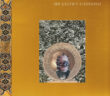
‘With Josh’s work I started with the lyrics. I got a lot out of them and built up a story that I connected with from them. Then, with the melodies, I took these ideas of stories into a style and context. Because of this dialogue and shared experience, it can be a really natural rewarding process. I have also done some covers for Dsico, which used a process of collage that I was working with at the time. I was loving putting together tiny bits of paper, like little colour chart puzzles, the pieces getting smaller and smaller in repeating pastels.

‘I’m constantly seeking new methods of construction. Technique and process are constantly developing. I embrace whatever methods my process takes me to. I am constantly looking and playing with what I find. There are of course consistently relied upon techniques such as collage and drawing, but even the ‘core’ methods are constantly evolving, one method never stays the same very long.

‘I think I find myself in a really great community of people in Sydney. From Space3 and all the artist-run initiative networks, I've been able to have a community of such like-minded yet different people. It's great being in Sydney for that reason, that I know so many people here having spent the better part of 28 years here, that you are in people's heads; it's hard to build that up overseas I've found. But overseas opportunities start to build a bit more also.’

Pressed on what his works might mean, James finds he only discovers meaning as he goes on – it’s all about the process. ‘Most of the time I'm making things and have no idea why I'm making them,’ he admits. ‘They just happen out of a drive to be creating. But then I look back and see that I really was communicating something I was working out in my head. I look back and can see that I actually knew more about what I was thinking about than I thought at the time. I love this use of creative process to work though thoughts, ideas and emotions. I can see this happening with musicians around me. Building little moods and poems from words and melodies, explaining things to oneself. I seem to be explaining personal confusions - for example working out how the body works, not how it actually works, but how you feel it working. Like the Josh Pyke work with hearts all over the body and intestines in the head. Working out how machines work, how you can construct mood and moment. Note taking, machine design, cogs and interconnectedness, the romance of things, little beauties in moments.’

For more on James and samples of work - www.jameshancock.net


+ James Hancock


dsico_cover.jpg
 
jpyke_cover.jpg
 
jpyke_clip_1.jpg
 
jpyke_clip_2.jpg
 
jpyke_clip_3.jpg
 
jpyke_clip_4.jpg
 
jpyke_clip_5.jpg
 
jpyke_clip_6.jpg
 
jpyke_clip_7.jpg
 
jpyke_clip_8.jpg
 
fragments_photoshoot.jpg
 
fragments_web1.jpg
 
fragments_web2.jpg
 
illustration_bird.jpg
 
illustration_orange.jpg
 
mechano_poster1.jpg
 
mechano_poster2.jpg
 
powerscape_bookcover.jpg