| Issue #008 (June 2004) |
|
| Kevin Purdy - A Brief History |
|
Email this article to a friend
Interview by Sebastian Chan
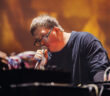
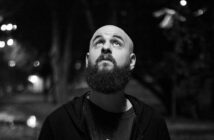
Kevin Purdy has been around forever. Oscillating between Sydney and Melbourne he is probably best known at the moment for his psych-rock influenced sampladelica, for his solo Purdy project and as a core member of Sydney three-piece Tooth. He is a self-taught multi-instrumentalist, as much a blues guitarist as a ProTools boffin. His musical career stretches way back to the late ‘70s playing with some of the seminal Australian post-punk and avant-rock outfits throughout the ‘80s, including the predecessor to legendary Sydney band Box The Jesuit. Purdy’s story is one of coincidence, constant experimentation and a commitment to following your own path.
The Madroom Years (early ‘80s)
The story begins in Sydney in the late ‘70s. Kevin explains, ‘I was a bit of a late starter due to the fact that every band I was in from the age of 11 broke up before they played their first gig. I was living the rock n’ roll dream in my head. I’d been playing some pretty mean drums since I was about ten, plus collecting records, and generally being a manic music nut. It wasn’t till 1979 that I found a notice in a music store from Brian Hall who was looking for other musicians with similar musical tastes – Eno, Velvet Underground, post punky stuff. Brian had a Tascam PortaStudio, Roland Jupiter 6 and a Dr Rhythm, could play guitar, bass and keyboard quite well and was a very unusual. As it turned out, he didn’t really want to play live… he’d only played once in a car park in Sydney’s Bankstown. Brian was really a classic bedroom boffin beat head, mixed with a bit of Phil Spector/Brian Wilson. When combined with my take on things, it produced some very curious results. Most of it was never released but we did put out a cassette album under the name Aural Indifference, titled The Sound of Indifference, and a 7” on the M2 label which was a version of “California Dreaming”.
‘Between us we spent thousands of hours in his studio, doing all sorts of cut-up post punk, poppy, Factory Records-style stuff, that made its way into many households in inner city Sydney. Meanwhile I hooked up with what was to become Madroom, the precursor to Box The Jesuit. Back then Goose had flaming red hair and was still known as a journo around town. Suzie, his girlfriend wanted to be part of the band so she was given a keyboard with the letters of the notes written on corresponding keys. There was also bassist Paul Koff and his girlfriend Karen, she wanted to sing, but was made manager… that was a scary mistake. That left our very own ‘Keith Levene’ [Public Image Ltd], Gary Taylor, on guitar. We rehearsed for about nine months, working through everything from Stooges and Velvet covers, to our own Joy Division/Echo & The Bunnymen/Roxy Music-inspired originals.
‘We ended up recording three tracks and releasing them independently as The Cruelty of Beauty, a reversal of the Louis Nowra book, The Beauty of Cruelty. It was launched at our first gig ever, at the Exit club, which is now Candy’s Apartment, possibly the most re-named venue in the history of Sydney. The place was packed. Double J (before it became Triple J) had been making a big fuss about it – we were their darlings for a while, until we got too weird. That’s where former Double J presenter Tim Ritchie came into it for us. He loved the weird shit and we couldn’t get weird enough for him. Tim was a big supporter and friend and even managed us for a couple of weeks.
‘Madroom went through lots of changes. I began bashing things apart from drums, like chairs and cookie tins, doing backing yelps and mumbles, running homemade tape loops and slasher guitar. We organised many happenings, complete with performance art, Russian films, oil lightshows and other craziness. We had hooked up with others like Tex Perkins and Lachlan McLeod, Peter Reid and Stu Spasm, who had an ever-changing variety of bands, some of which I was in, such as Chicken Holder, Leather Moustache, Thug, Salamander Jim, and Moist.
‘Madroom was a regular act at the Strawberry Hills Hotel, the Trade Union Club, the Yugal Soccer Club, Behind Enemy Lines and other seminal 80s underground venues around Sydney. We played with The Tactics, The Models, Box of Fish, The Lighthouse Keepers and a lot of other great (and crap) bands of the time.
‘Eventually we put out an album that had a paragraph-long title taken from the Klaus Oldenberg Manifesto – I’m for an art … The engineer had a habit of nodding off over the mixing desk and taking breaks to score [smack] and consequently it took forever to finish and sounded like crap. The mastering and pressing made it sound even crappier. It was rightly slagged. The follow up was a 7” of our big live number “Acid Dog Man”.
‘Madroom went through about seven guitarists, eventually stopped looking for one, and we decided to all play guitar instead. Near the end we got our own sound, a sort of drunken dada-ish loose, lazy, less-inhibited one. Sadly, the recordings were never released, except for the ‘Banana Box’, a 50-only cassette box, with a plastic banana stapled to the front. I never got one. Suzie says she hasn’t got one either, but I don’t believe her. During all this artiness, I had discovered early rhythm n’ blues, soul, funk, hillbilly, bent rockabilly shit and lots of points in between. But I’d also become more serious about playing guitar, which was a crime in those circles. Madroom was together for five years and five minutes after I left the band they became Box The Jesuit.’
Melbourne (late ‘80s to early ‘90s)
‘After Madroom, I spent the next year or so playing with an Afrofunk outfit and a hillbilly thing I called Gasoline. They were very unsettled times, and I was living in Sydney’s Kings Cross and then above the Hopetoun Hotel. I knew I had to get out. Then I discovered Melbourne, which was like shining beacon of musicality, as well as a quieter, cleaner, happier, sexier place in general, with great record shops and music on every street corner. I sold just about everything I owned and moved. It took a long time to find my feet there as an outsider, but I kept at it. Eventually I hooked up with Hamish Marr from These Cars Collide, a band I’d been on line-ups with. Hamish played a mean finger-picking blues-style guitar and sang, whilst I played rhythm and lead guitar, kick drum and hi-hats with my feet plus vocals. Together we were called The Chicken Hawks, doing rhythm n’ blues, strychnine-laced hillbilly and rockabilly and eventually some originals. It was like Sun blues artist Joe Hill Louis meets Tav Falco’s Panther Burns. We were regulars at the Espy, the Corner and several other places. The Hawks eventually started adding members, I got out from behind of the drums and the originals got to be a bigger part of the set. The band changed its name to The Ocean Stairs and basically became Hamish’s band, in which I played guitar, vibes, drums and did backing vocals. During all of this I was playing with several other bands, sometimes seven nights a week, doing jazz, country, dub, whatever was cooking. My music tastes were constantly evolving. I travelled around the world, wrote lots of tunes, and worked in my studio on all sorts of new ideas. I was now fusing a lot of new sounds – hip hop and dancehall were co-existing beside funk, rocksteady, dub, jazz and other Afro sounds. It wasn’t much of a shift to start developing ideas that ran parallel to the evolving trip hop sound of the time. It came together for me when I heard U.N.K.L.E.’s The Time Has Come EP, Wagon Christ, DJ Shadow and so on. I could hear a kindred spirit in them, people who seemed to have a broad range of influences and were able to combine them in an abstract fashion.
I started my career as an ‘electronica artist’ by chopping breaks and sounds bit by bit from my belt-driven turntable onto my 4-track, later adding keyboards, vibes, spoken word, percussion, making some weird dubby, breaky excursions. Alongside all of this I was presenting radio on 3PBS and DJing more and more. The Ocean Stairs fizzled out in 1994, leaving behind a self-titled CD and a bunch of unreleased material, but I was off and running with the new shit that was developing in my studio. I got myself an Ensoniq 16+ sampling keyboard and a drum machine and began writing on that, once again overlaying on the 4-track. This eventually led to me getting an AtariST and Cubase setup, which was when I really started to get the tunes that were destined for my first releases and eventually the Kevolution album.’
Sydney (the last decade)
‘In 1996 a friend of mine played Creative Vibes’s Peter Pasqual a demo of my stuff and he seemed to be really keen for me to be involved with his label. At the time it seemed a very cool idea, especially because they were closely connected with Ninja Tune [as the Australian distributor]. So I started getting all these ideas about going back to Sydney. In my last months in Melbourne I finished “Dope Thing” for Creative Vibes’ Evolutionary Vibes I compilation as well as performing at [seminal mid-90s Melbourne ambient night] Global Warming, and my own night at the Prince of Wales called Uppah.
‘I had been back in Sydney for just two days, recuperating at Curl Curl beach, when I met Sir Robbo. I had been aimlessly wandering around, trying to find a few underground happenings. Ken Cloud at the now defunct Reachin Records told me to check Club Kooky [the legendary, performance-meets-eclecticism weekly club night run by Seymour Butz and Gemma, 1995-2001]. Someone else said to check The Cricketers Arms [which hosted some of the best eclectic low key nights around 1995/6]. Next stop Good Groove records. I get into a rave with JD, the guy behind the counter, about records, places to go, and I mention I make music, his ears prick up and he asks me about it. He puts on my demo CD, and two minutes later the guy beside me asks, “What’s this?” JD points at me. The tune that was playing was “Sugar”, which became my first solo record on 7” vinyl. Sir Robbo was the guy next to me, and one of the heads behind underground zine Head Shots, which I’d been collecting in Melbourne, and he asked if I would be interested in an interview for the mag. The interview never surfaced but we got to hang out a lot.
‘Robbo had recently become involved with Frigid, which was then just starting out at Kinsela’s [see Cyclic Defrost Issue 1]. He hooked up one of my first gigs in Sydney there and helped out with sounds on the decks when I played my Frigid debut. I’ll never forget that night: a room full of happy faces, digging the tunes. Some of those faces became good friends, the start of a very positive new stage. Not long after, Robbo and I started hooking up for some sessions in my recently updated studio. Instead of the usual swag of funk breaks, Robbo brought around psyche beat/rock, folk, soundtracks and all sorts of unexpected stuff. It came together beautifully. Over the years, lots of people have said, “Hey, maybe we could lay down some beats together”, but, apart from the fact I generally don’t have the time or mental energy, I just can’t see it, not like I could see it with Robbo – it was right, you just know these things.
‘We had the bed of a bunch of tunes for what was to become the No Strings album (released in 1998) down in no time and were soon doing gigs as The Sir Robbo/Purdy Experience. It took about a year and a half to finish No Strings, which back then seemed like an eternity, but really everything was happening so fast. For the album and live gigs we had teamed up with Dale Harrison, who provided bass and good company. With help from Cryogenesis and the Fromage posse we got our crazy selection of Indian chants, sunshine pop, cocaine disco, space boogie and psychedelic lullabies together, with gorgeous artwork by Fromage’s Duncan Irving. All the reviews of No Strings were amazing, tons of kids dug it, it got lots of radio play [especially on the community stations], but it didn’t sell as well as would have appeared… Probably three-quarters of the people who liked it had burnt copies, which gave us the kudos factor, though without the sales factor. But by the time we put out our second album, Sirens From Here To Titan in 2001, the general vibe was that our first album did very well, but I was always mystified. There were so many cool, crazy kids buzzing around at the time, with Freaky Loops parties turning hordes of people onto leftfield beats, so what was with the stupid low sales?’
Fairytale Insurance (today)
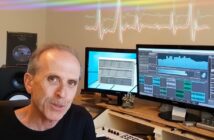
Kevin Purdy has spent the last two years working on his second solo album Fairytale Insurance, a lavish, sprawling record that is equal parts sample-based Krautrock, and warm, enveloping psychedelic live instrumentation. His production has become more expansive, helped by new equipment and a shift to ProTools. He says, ‘I want to use technology to make things simpler. I was using the Atari ST to trigger the Akai [sampler], now I just use ProTools. My main focus is to compose music, everything else is just flummery and I’ve never had any interest in being a technological wiz, it’s not the way I’m made. I can’t read manuals and I know next to nothing about the most basic of technical terms and concepts, I just want to make music. Originally it was just a cheaper and more efficient way to multitrack, without getting a 24-track analogue set up… I got myself heavily in debt last September and bought a whole stack of cool studio gear, including a full ProTools set up, a Mackie desk and some beautiful microphones. I wanted to get my studio to the point where I could do the whole process up until mastering myself, without having to pay for studio time, or having to translate my thoughts to a mixing engineer.
‘So the journey began, not only to finish the album, but to learn how all this new technology worked. That’s how I spent my summer. After months of work, technical mishaps and madness, I sussed out what I was doing and how I wanted to do it, and with a few weeks to spare, I finished the album. So the flavour, the comfort and tension, the colours and the magic of the album all came from, basically, those three weeks. The other thing which adds richness to the album was that I now had the ability to lay down as many layers of live instruments as I wanted, some tracks with four guitars, two bass tracks, three cellos and five layers of percussion. This gave me so much scope to interweave sonic colours. There were times where I thought I’d never make it, editing tabla lines for hours like a mad professor. I wanted the album to have a wholeness to it, to take you somewhere as a journey. The tunes were becoming more lush and seductive, and I wasn’t about to let that stop. When I write, I’m gauging the effect the sound has on me and working on strengthening the aspects of sonic colour, to heighten that effect. On this album I tried to tie the tunes together so that they all shared a common journey. Though the journey, like the title, has a duality, investigating lines of fantasy, dreams and childlike wonder juxtaposed with the lightning bolts of the bogeyman, the despair of the oppressed, the hopes of the human spirit, in a world in which it is downtrodden. The end result is really in the eye of the beholder. Some have noted the album as dark and some as light and bright. I think the dark aspects are more like sitting on a cliff at night under a large full moon. All of those things could lead some to intense discomfort, others to blissful joy, depending on whether you go with it or not.’
Fairytale Insurance comes at a time when pop is on an upswing, lyrics and vocals are everywhere in the remnants of the electronic scene. Abstraction, depth, and the ‘journey’ doesn’t seem to fit with the MP3 and Ritalin generation who demand instant, quick gratification. ‘It’s a crazy scene when you’re making lengthy abstract tunes in a time where the market wants short, catchy, genre-specific product. They don’t want space jams, not in Australia anyhow, I’m talking the mass market here, not music loving, open-minded folks. So we’re always essentially giving the bird with our stuff, being cheeky schoolboys who won’t tuck our shirts in… If my label Soft sold lots of CDs and I had my way, I’d release tons more vinyl, gatefold 10”s with posters and bubblegum cards. Boxed sets with comic books and pop out 3D glasses. I think there’s still a few of us out there. I think it’ll be alright, we’ll last the long run because we do what we love.”
Purdy’s Fairytale Insurance is out now on Soft Records. Copies of the “Sugar” 7” and other back catalogue can still be ordered directly through Soft Records.
To find out more on the Melbourne and Sydney underground scenes of the ‘80s and ‘90s, check out Bob Blunt’s excellent book, Blunt- A Biased History Of Australian Rock, which is available in most quality bookshops. |
|
|