Issue #005 (September 2003)
Delire
Email this article to a friend

Interview by Gavin Ross

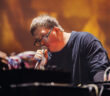
In a chaotic world full of sonically-static environments drowned in digital bliss, the music of Délire detonates, and shards of sound that are beyond glitch-noise, beyond formulaic laptop ramblings, spread over the landscape, infusing all surroundings with a virulent strain of calamitous frequencies. Julian Oliver has used his knowledge as a software developer and his passion for graphical gameplay to give birth to compositions that can exist within, and give life to, the microbit world. He has been working with software for the last six years, and has been involved in various electronic composition practices since around 1995.

‘In the mid-nineties I became absolutely taken with the plastic possibilities of sound design in data-space,’ he explains. ‘Previously I had explored and made electronically amplified stethoscopes, VLF radio devices and various other electronic and non-electronic objects. But I could never work with them for more than a few shows. They all developed into bad habits, centred around the object and their spectacle. I suppose I realized early on that I wanted to have a very flexible context for designing the conditions for both sound propagation and the sounds themselves.

The cult of laptop music itself never appealed to me; if I could design and build instruments as flexibly out of ‘real’ stuff I would have done so. Anyway, it is important to remember that ‘sound’ does not happen inside computers. The phenomenon of sound occurs at the point where there are changes in air-pressure…in this sense, the laptop artist is engaged in the project of being able to complexify the ways in which sound can actually propagate. I like this relationship I have with sound, and look forward to greater and greater depths of complexity in my data-space for this reason.’ The culmination of all of Julian’s experimental work in the last few years is Diaspora, his first full-length album, released on the Synaesthesia label.

‘I had been meaning to make Diaspora for some years; I wanted to make an uncompromising album that selfishly explored my own need for cataclysmic atmospheres, hiss ‘n’ blitz and rapid shifts in velocity. I wanted also to produce an album that conveys a lot of my favourite moments in game-play and science fiction. Continued computer use has evolved me, which in turn of course informs the way I compose.

‘Délire’ is a term borrowed from French Philosophy, describing the point at which the Subject loses control of language, and is in turn infested/controlled by the medium of language. This has come to describe the way I work (or am ‘worked’).’ The first preview of the album was displayed in a track titled “Idiot Savant vs. The Centre Of Effort”, which was on a disc named Strewth!, a compilation of various Australian experimental artists released by Synaesthesia in 2002.

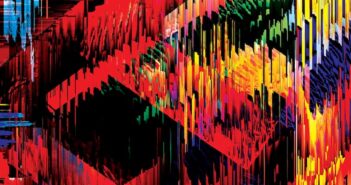
‘When Strewth! was being put together, Mark (Mark Harwood of Synaesthesia Records) was aware that the track was a part of a larger project. In many ways that was the seed of Diaspora as it came to be (Thanks go to Mark for this).’ When listening to Diaspora in its entirety, it is impossible to keep your imagination from conjuring up wild, bit rate images. It is, in a sense, a very atmospheric and visual record.

Included on the disc are two short QuickTime video pieces that Julian created himself. It makes this reviewer, and no doubt many other listeners, wonder which comes first, the sound or the visual aspects of the track? ‘Currently I build various conditions for the triggering and manipulation of audio into the game environment, which is then sent over a network to another computer running Miller Puckette’s Pure Data,’ he explains of the process. ‘Whatever happens in the game becomes ‘control data’ for the processing of audio in Pure Data: head rotation, player location, weapon state, player state. The actual samples themselves are in many ways arbitrary, as they are reworked as a function of play. I really like the revision of ‘playing music’ that games offer. “Qthoth” on the CD is a deep modification of the Half-Life engine and was made in 2000. The other video is an abstraction of a multi-user interface we (at SelectParks, a group that Julian works with) were playing around with in the studio.’

Even though Diaspora stands alone on its own original feet, there are several influences that do rise to the surface if one listens closely. ‘The name of the album is a clue, albeit an obscure one. Diaspora is a book by Greg Egan. He’s a kind of ‘ficto-physicist’, writing hard science fiction that traverses many different scales of agency, states of embodiment and temporal domains. Though my album is not a strict impression of this book, many of the ideas did bubble through into the compositional process. Much of what I composed for Diaspora also relates to the kind of games I want to be playing in the future, especially in the emerging field sound based games.’

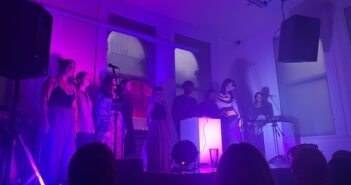
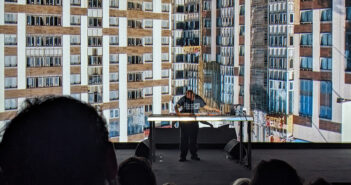
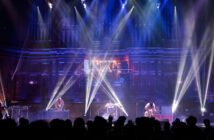
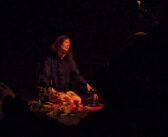
Délire’s live performances are always uncompromising and, sometimes, cinematic to their own degree. While some shows consist of him sitting behind a laptop and infesting the speakers with his futuristic noise, other shows have an audio-visual set-up so that the audience can experience in full the ideas that he is trying to get across. ‘There is preparing and there is practicing (for the performances). Naturally there is always a lot of preparation when a big part of a performance involves the creation of new interfaces. Once I have the software built I certainly try to explore what I can do with it as widely as possible. It’s important for me, however, to not practice too much (in the sense of rehearsal), as then I’m more likely to surprise myself during performance. This provides both an elusive and extremely satisfying outcome. The work I played for the Synaesthesia launch party in Melbourne (in June 2003) was a Quake3 mod, where the dynamic situation of two bots in combat was used as control data for the synthesising of audio in ‘Pure Data’. I’ve been working on a system to use sounds to scare the bots, who then run away and make new sound. This is where I have some agency within that environment. That night the bots weren’t very easily scared, but people seemed to like it all the same. To hack the game-engine and set up the right conditions took me a few weeks and the help of a friend.

A few months ago Julian was part of the Synaesthesia jaunt overseas that took in parts of Europe and Greece, to name but a few places. Along with Mark Harwood and the label’s other artists (Anthony Pateras, Robin Fox, Snawklor), he exposed his sound to the appreciative experimental music audience in those parts. ‘I think the biggest night for everyone was Confluences in Paris. The Buro people hooked us up with an amazing crowd, I think there were around 450 to 500 people that came through the door. At previous gigs I was getting kind of cocky about the size and number of files my low-latency Linux kernel could work with, so that night…let’s just say I played my shortest set! But it went down well, everyone played so well and we were smiling about it for the rest of the tour.’

Although the debut album took a long time to come to fruition, we won’t have to wait too long at all for the next project, in whatever form it may take. ‘I have another album on the way, though it’s early days yet. I am hoping to move into more software-based releases — DVDs and also audio that is produced in a more immediate fashion, now that I am a better performer on my own software. This album will come much faster than the last.

‘Right now I’m working for a research institute in Sweden, and will be for another five months. From here I’ll move Belgium to work on a project with South Australian Nik Gaffney (foam/Farmers Manual). The rest of the year includes a few shows in Spain, South Africa and around Scandinavia. Hiaz, Martin Ng (Farmers Manual/GATTCATT) and I are working on a project next year. I’ve looked forward to this for some time!

‘Where the Délire project is concerned, I hope one day that it will become an organisation of its own, with several collaborators all contributing to the output. Right now there are a few developers I’d love to work with and at some stage I’d very much like to do a synapse-splitting duo with (Mego’s) Florian Hecker. I have several non-sound based games in production, though with all the amazing facilities here, and the plethora of recording studios, I will be beginning another new project soon. It involves using ‘Almost Intelligent’ software bots as a ‘band’ that can perform on their own songs. They may not look so humanoid however...’


delire.jpg