

Issue #013 (March 2006)
Ceephax Acid Crew
Email this article to a friend

Interview by Thomas Whitehead

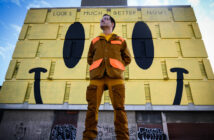
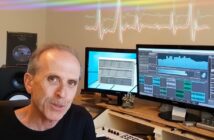
Andy Jenkinson is the one man Ceephax Acid Crew and a true child of Chelmsford, a fairly quiet, suburban, but strangely musically fecund town outside London that has also brought the world Cassetteboy, Railway raver, MC Philie-T (who has enlisted Andy’s acting skills for his chelmsfordfilmsociety.com website) and Andy’s own older brother Tom “Squarepusher” Jenkinson.

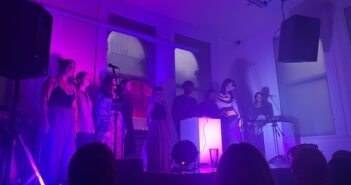
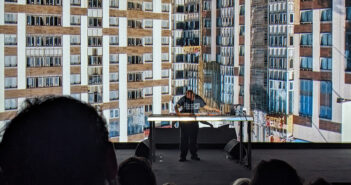
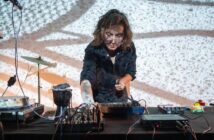
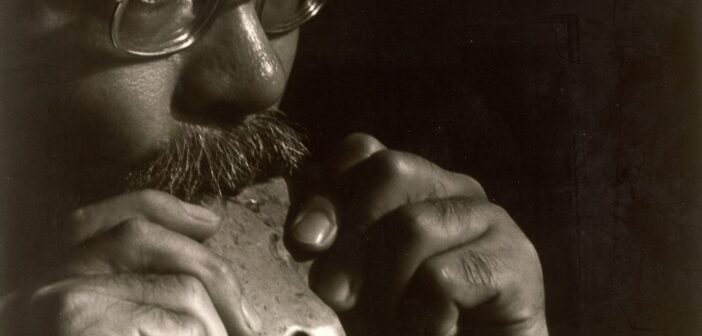
Andy has produced a steady stream of published work, stretching back from 1998’s Radiotin EP on Ed Dmx’s Breaking Label, through to remixes of his brother’s work on Warp, a full length LP and numerous other releases on Breakin’ and FirstCask recordings. Coming up is a new EP on the Belgian label Bugklinik. However, it is in live performance that Ceephax’s idiosyncratic flair really becomes apparent. His set up can range from fully live with a 303, 606 and harmonica to old school, hardcore DJ sets played on a cheap tapedeck with daft rave declamations shouted through an equally cheap mic.

It is unlikely therefore, that Andy will be joining the masking-taped Powerbook brigade anytime soon. ‘I'd like to bring even more old stuff down to live gigs to play with but that would just be mental in terms of carrying weight, space and responsibility; I can't afford to replace it. I'd also need another me to operate it all at once.’

First exposure to the allure of the Roland 303 came from Andy’s older brother. ‘Tom had gone out for the evening, probably in 1992 or ‘93 and I recorded a load of his riffs mixed with a cassette cut-up of TV show Countdown that I had made.

‘I think I knew the sound from an Ancient rave tape named Andromeda Tom had in 1990. But I didn't really know what it was until we were at the dentist one day in 1991. As soon as I heard the track ‘Slam’ by Phuture Phantasy Club I think I was pretty hooked. I cried once when my parents wouldn't let me stay up to record an interview on Kiss Fm with DJ Pierre. It worked, I taped it.”

With additional influences coming from medieval folk, British television of the ‘80s (Ceephax in fact takes his name from the British teletext system “Ceefax”), the pioneering electronics of Delia Derbyshire- and Rob Hubbard-era computer game soundtracks, It seems quite a stretch to trace back a lineage from Ceephax’s output back to the work of these future-looking, predominantly black American pioneers.

‘It must be meaningfully linked to their work simply because it had such an influence on my musical life for so long and still does. It seems that my career is based in a large way around acid music as well ... What happened actually? Occasionally I will try to make a classic acid track in the Chicago style, but their production is pretty hard to beat. I try and retain the psychedelic flavour of their acid riffs though as the later, more trancey-based acid stuff goes a bit one-notey and reliable so as not to freak out E-heads.’

I put it to Andy that in spite of this deep understanding and reverence for the history of this music, there is something uniquely British in the combination of this diligent stylistic formality with a shambolic sense of the absurd: that the seemingly slapdash humour is actually the driving force behind turning his technical seriousness into true invention.

‘(Live) it starts to become a bit bizarre especially if there are purists about. If the whole load of equipment is going wrong when I'm playing live then there's not much else to say than “Sorry”, have a laugh and then try and get it working again; it often adds a kind of Fawlty Towers aspect to the acid … I think it works well in Britain if something doesn't work well, if that makes sense. The fact that when I play live it can sometimes be an avalanche of mistakes and good fortune, people seem to enjoy it. I do like to be serious though and spend quite a while fine-tuning musical things at home, and I actually love it when things work, it's much easier for me. I've no idea where the balance lies. I think it would be completely rubbish if I had no well-made music and no talent to back me up and still went on stage and messed around. It's different playing abroad sometimes because I can't speak to the audience as much, and maybe they're more used to things working! I played at an acid rave in Ghent in Belgium the other day and although it was really good, I could see it wasn't time for acting the goat.’

This points to the broader international appeal of the Ceephax Acid Crew. As well as paying regular visits to his loyal Belgian fanbase, Andy has taken his work east across Europe into Russia and has even played at the Japanese wing of the Sonar Festival – in spite of a deep-set aversion to flying – which, hopefully, should be no obstacle to his finally making his way to Australia.